Why Use a Smartphone for Jewelry Photography?
- Convenience: Always in your pocket; no bulky gear to set up.
- Advanced Tech: Built-in macro modes, HDR, and AI-enhanced sharpness capture fine details effortlessly.
- Speed: Shoot, edit, and upload to Instagram or Shopify in minutes.
- Cost-Effective: Leverage equipment you already own.
Step 1: Choose the Right Device & Lens
- iPhone Users: Models from the iPhone 12 Pro and later (especially the 15/16 Pro series) offer exceptional macro modes with 48MP sensors that capture incredible texture.
- Android Users: The Samsung Galaxy S24 Ultra, Google Pixel 9 Pro, and Xiaomi 14 Ultra are top contenders for their detailed close-up performance and superior computational photography.
Pro Tip: Always use the rear camera. It has larger sensors and better lenses than the front-facing selfie camera, which is designed for wide-angle faces, not intricate details.
Step 2: Stabilize for Sharpness
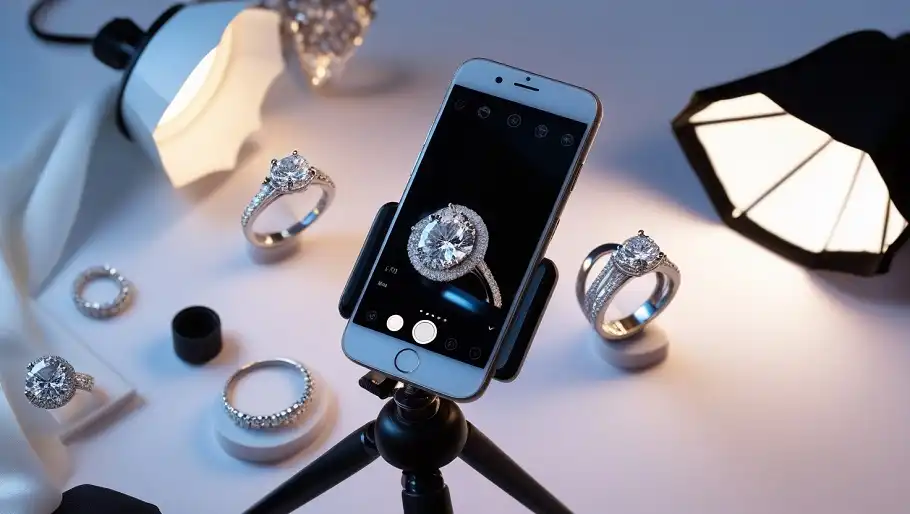
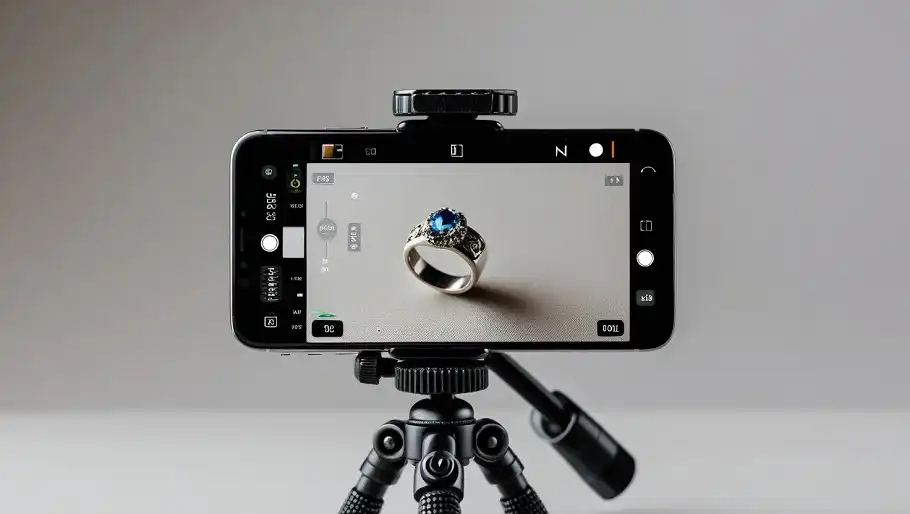
Jewelry photography requires absolute stability to avoid blurry images. Even the slightest hand movement can reduce sharpness. Using a tripod with a phone mount ensures stability and helps maintain a consistent angle across shots.
Recommended Options:
| Accessory | Benefit |
| Mini Tripod | Compact, easy to position |
| Clamp Stand | Keeps phone steady for close-up shots |
| Gimbal Stabilizer | Reduces motion blur when shooting handheld |
If you don’t have a tripod, place your phone on a stable surface and use the timer mode to avoid movement when pressing the shutter.
Step 3: Master the Lighting
The Golden Rule: Diffuse Your Light
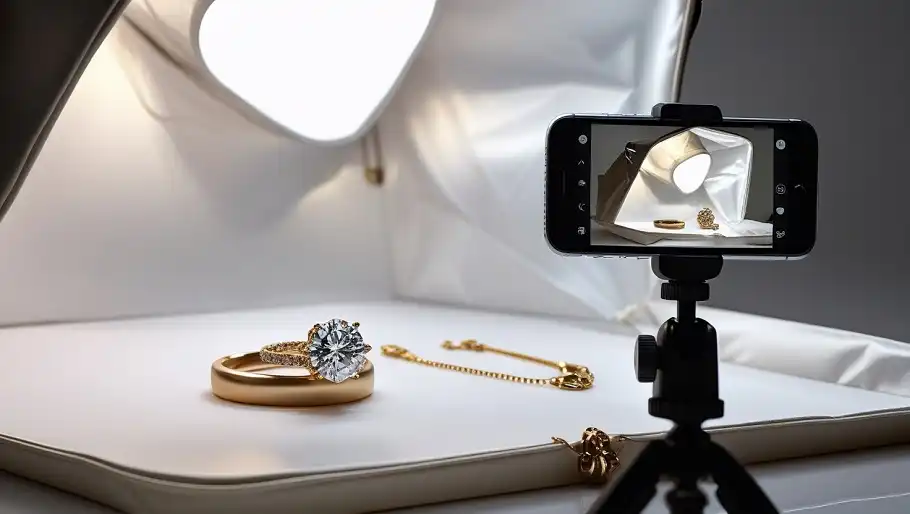
- Natural Light (Budget-Friendly): Place your setup next to a large window with indirect sunlight. Use a sheer white curtain to diffuse the light further.
- LED Panels with Softboxes: Provides consistent, adjustable brightness. Position two lights at 45-degree angles to the jewelry to eliminate shadows and highlight facets.
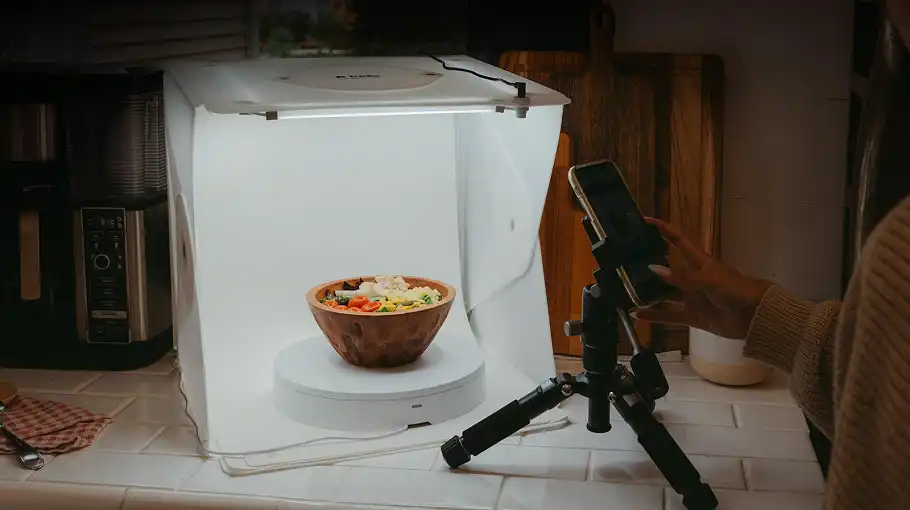
- Light Tent: A small, enclosed tent with translucent walls. This is the easiest way to eliminate reflections and create a seamless, shadow-free environment for small items like rings and earrings.
Step 4: Select the Perfect Background
|
Background Type
|
Best For
|
Why It Works
|
|---|---|---|
|
Pure White
|
E-commerce (Amazon, Etsy, Shopify)
|
Industry standard; clean, professional, easy to edit.
|
|
Matte Black
|
Luxury & High-End Branding
|
Creates dramatic contrast; makes gold and silver pop.
|
|
Marble/Wood
|
Lifestyle & Social Media
|
Adds texture and context; feels organic and warm.
|
|
Velvet/Fabric
|
Soft, Romantic Looks
|
Absorbs light, reducing reflections; adds depth.
|
Step 5: Prep & Position Your Jewelry
- Clean Thoroughly: Use a microfiber cloth and gloves to remove fingerprints, dust, and oils. Even tiny smudges look huge in macro shots.
- Positioning Tricks:
- Rings: Use clear wax, museum putty, or fishing line to stand rings upright.
- Necklaces: Drape them in a natural “S-curve” or hang them from a clear stand to show length and pendant detail.
- Earrings: Hang them or lay them flat with studs secured in foam to keep them symmetrical.
Step 6: Camera Settings for Crisp Details
Camera settings for jewelry photogtaphy is essentail steps which can’t be skipped.
Manual Focus & Exposure
- Tap to Focus: Tap directly on the gemstone or intricate metalwork on your screen to ensure the sharpest part of the image is in focus.
- Lower Exposure: Jewelry (especially silver and diamonds) reflects light. If the image looks washed out, slide the exposure slider down slightly to recover detail in the highlights.
Pro Mode Settings (If Available)
- ISO: Keep it low (100–200) to minimize digital noise/grain.
- Shutter Speed: Faster speeds (1/100s or higher) freeze any potential movement.
- White Balance: Adjust manually. Cooler temps (4500K–5000K) suit silver/diamonds; warmer temps (5500K–6000K) suit gold.
Step 7: Edit Like a Pro
Recommended Apps
- Adobe Lightroom Mobile: Best for color correction, sharpening, and noise reduction.
- Snapseed: Great for selective edits and removing small dust spots (Healing tool).
- Photoshop Express: Good for quick background removal and basic retouching.
Key Editing Adjustments
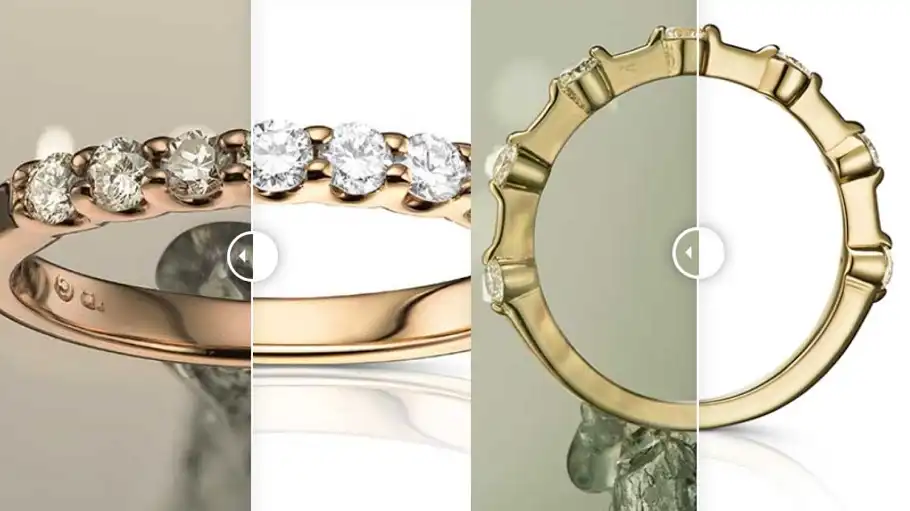
- Brightness & Contrast: Brighten the image slightly but maintain contrast to keep metals looking metallic, not gray.
- Sharpening: Increase sharpness by 10–20%. Over-sharpening creates artificial halos. Use the “Clarity” or “Texture” slider to enhance gemstone facets.
- Color Correction:
- Gold: Ensure it looks warm and rich, not yellow or brassy.
- Silver: Keep it cool and crisp.
- Gemstones: Boost saturation slightly to make colors vibrant, but keep it natural.
- Cleanup: Use the Healing Brush to remove remaining dust specks or minor scratches.
Background Removal
Choosing the Best Editing App for Jewelry Photos
Most smartphones have built-in editing tools, but for professional-level jewelry retouching, specialized apps offer more control.
Best Editing Apps for Jewelry Photography
| App | Best For | Price |
| Adobe Lightroom Mobile | Color correction, sharpness, noise reduction | Free / Premium version |
| Snapseed | Fine-tuned edits, selective adjustments | Free |
| Photoshop Express | Basic retouching, exposure fixes | Free / Premium version |
| Pixel Retouching (Professional Service) | High-end retouching, background removal, reflection fixes | Paid service |
Common Mistakes to Avoid
- Using Direct Flash: Creates harsh glare and flattens the image. Always diffuse.
- Ignoring Reflections: Check your screen for reflections of yourself, the ceiling, or the room. Use a light tent or black cards to block unwanted reflections.
- Over-Saturating Colors: Makes jewelry look fake. Aim for true-to-life representation.
- Shooting in Auto Mode Only: Take control of focus and exposure to ensure consistency.
Bottom Line
Phone shots of jewellery are usable once the background and the metal are cleaned up. Jewellery store photo retouching does that at catalogue scale.
FAQs
1. Can I take professional jewelry photos without a DSLR?
Yes! Modern smartphones have powerful cameras that can capture high-quality jewelry photos. With proper lighting, stabilization, and editing, you can achieve professional results without a DSLR.
2. What is the best smartphone for jewelry photography?
The iPhone 12 Pro and newer models, Samsung Galaxy S21 Ultra, Google Pixel 7 Pro, and OnePlus 10 Pro are excellent choices due to their macro photography capabilities and advanced image processing.
3. How do I remove reflections from jewelry photos?
Use diffused lighting, position your light sources at a 45-degree angle, and edit out unwanted reflections using Lightroom or professional retouching services.
4. Should I use a white or black background for jewelry photos?
A white background is best for eCommerce (Amazon, Shopify, Etsy), while a black background enhances luxury branding and makes gold and silver jewelry stand out.