ISO-certified studio · 80+ retouchers · 3M+ images +65 9050 7285 info@pixelretouching.com Open 24 hours
Start a Free Trial
Ghost Mannequin · Neck Joint · Apparel

Professional Ghost Mannequin Services for Apparel & Fashion eCommerce

Professional ghost mannequin services for apparel retailers. We remove the mannequin, composite the interior collar and return a garment that holds its natural three-dimensional shape — from $0.50 an image, within 24 hours. Pixel Retouching has produced ghost mannequin images since 2014, from ISO-certified studios in Singapore and Dhaka.
Garment on a mannequin after retouching Garment on a mannequin before retouching After editBefore

Hover to see before

3 garments edited free. No credit card, no sign-up.

24h Turnaround
80+ Retouchers
100% Hand-edited

Trusted by Fashion Brands, Apparel Manufacturers & eCommerce Businesses

Clothing labels, marketplace sellers and product photographers send us their mannequin frames and get listing-ready garments back the next working day.


ZEELUM
SQUARESHOT
soona
Pro Product Photo
OMS Photo
Prop Photo Studio
Northlane
VANTRA
Lumeo
Kindred & Co.
Atelier Nine
HALCYON
ZEELUM
SQUARESHOT
soona
Pro Product Photo
OMS Photo
Prop Photo Studio
Northlane
VANTRA
Lumeo
Kindred & Co.
Atelier Nine
HALCYON
3M+Images processed
80+In-house retouchers
8,000+Images a day
200+Brands worldwide
The technique

What Is Ghost Mannequin Photo Editing?

Ghost mannequin photo editing is an apparel retouching technique that removes the mannequin from a clothing photograph while preserving the garment’s natural shape, structure and three-dimensional form. Every file is finished by hand in Adobe Photoshop, with a named retoucher responsible for the batch and a second editor checking it before it ships.

Ghost mannequin defined

The mannequin is edited out and the garment is left hollow but shaped — a floating piece of clothing that appears to be worn by an invisible body.

Invisible mannequin vs neck joint

Two names for one job. Invisible mannequin describes the result; neck joint names the step that produces it, where the interior collar is composited into the opening.

How the effect works

Each garment is shot twice — exterior on the form, interior separately. Both frames are composited in Photoshop, the form is masked out and the interior merged in.

Why fashion brands use it

It is the eCommerce standard because it delivers a consistent, professional look at a fraction of the cost of a live model shoot, and scales to a full catalogue.

How it works

How Our Ghost Mannequin Service Works

Four steps from raw frames to listing-ready files, with no account setup in between.

Step 01

Shoot and send

Front, back and the interior collar under the same light. Send JPEG, PNG, TIFF or RAW by link, Dropbox, WeTransfer or FTP.

Step 02

Manual editing

A named retoucher paths the garment, removes the form and composites the interior by hand.

Step 03

Quality control

A second editor checks edges, symmetry, colour and shadow against your style guide.

Step 04

Delivery

Files return within 24 hours, sized for your marketplace. Revisions are unlimited.

What we edit

Our Professional Ghost Mannequin Editing Services

Ten rows, ten different garments, each shown on a piece that actually demonstrates the technique — collars on a collared shirt, sleeves on a sleeved one, leg openings on trousers. Drag any slider to see the real file, before and after.

Wrinkle and crease removal, dust and loose threads, colour correction, a grounded shadow and marketplace sizing come with every order and are not charged separately. They are not shown as rows here because none of them is visible in a thumbnail; apparel photo editing, colour change service and clipping path work cover them in their own right.
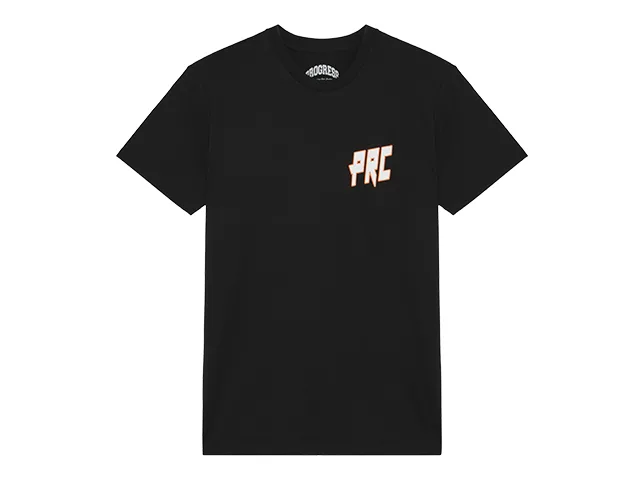
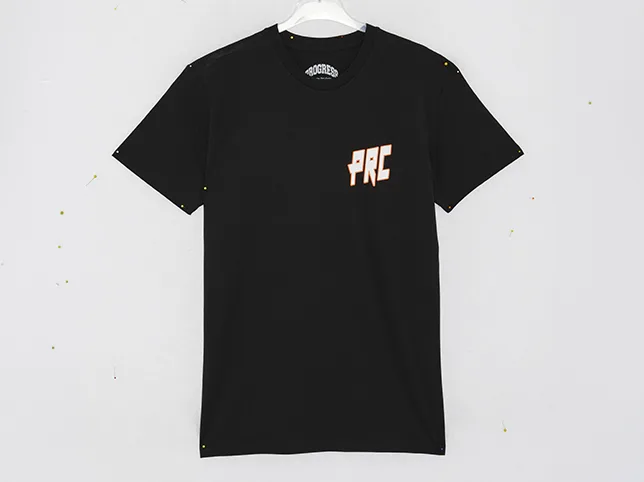
Black printed t-shirt after the mannequin was removed and the collar interior composited in
Black printed t-shirt before the mannequin was removed and the collar interior composited in
Before After

Neck Joint and Inside Label

The core technique. A second photograph of the garment turned inside out is composited into the neck opening, so the piece shows real depth instead of a flat hole - and the brand and size labels inside the collar are rebuilt to sit correctly against it. For many labels the woven tag is part of the product rather than a detail to clone away.

  • Interior collar shot composited in
  • Brand and size labels rebuilt in place
  • Natural depth at the neck opening
  • Text kept legible when buyers zoom
Try it on 3 images

Collar Reconstruction

Where no interior frame exists, or the collar was distorted by the form, the opening is rebuilt by hand rather than composited. Structured pieces - shirts, blazers, anything with a placket - depend on this holding a clean, symmetrical line, because a collar that sits crooked is the first thing a buyer notices.

  • Collar rebuilt by hand, not cloned
  • Symmetrical line across the opening
  • Structured shirts, blazers and plackets
  • Facings and stand kept square
Try it on 3 images
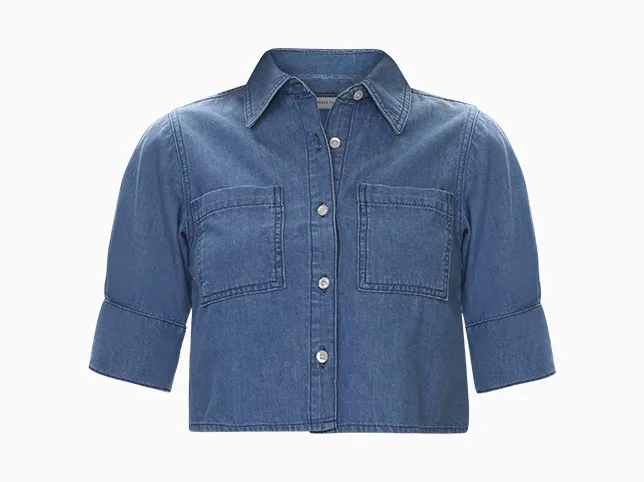
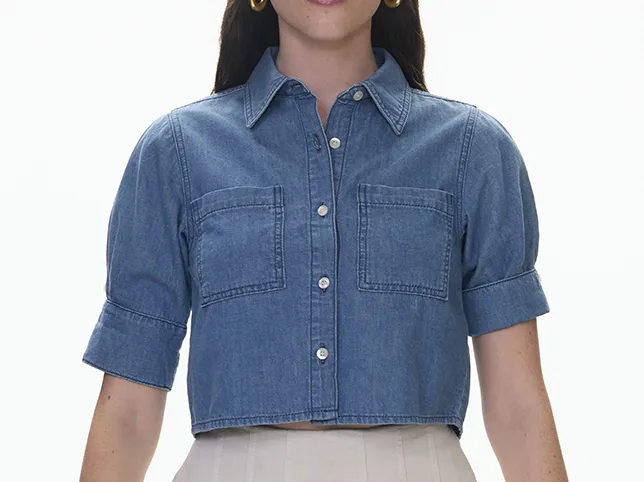
Cropped denim shirt after the mannequin was removed and the collar and cuffs rebuilt
Cropped denim shirt before the mannequin was removed and the collar and cuffs rebuilt
Before After
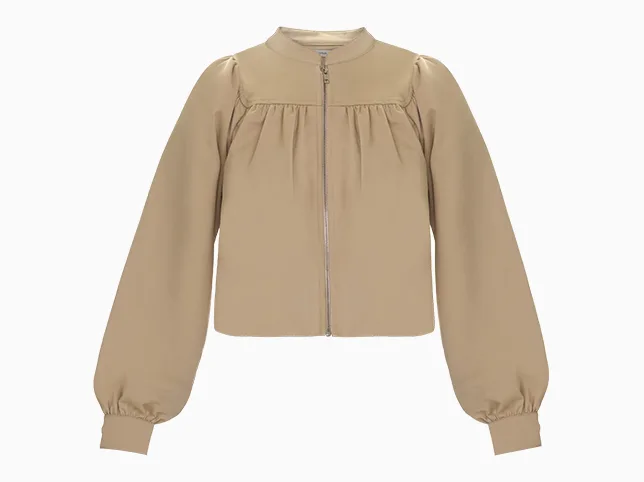
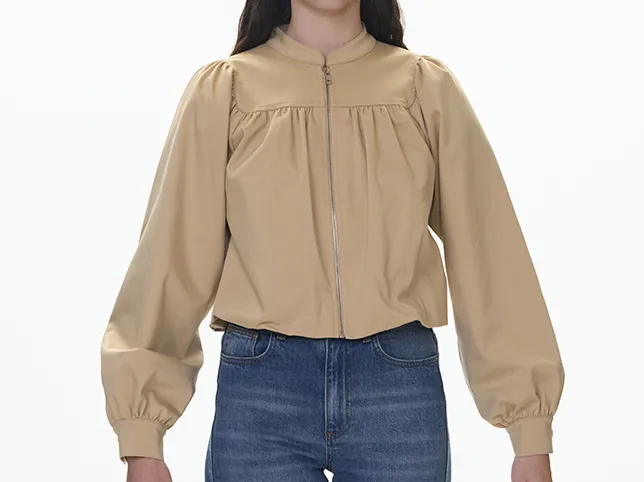
Tan blouson jacket after the mannequin was removed and the shoulders and sleeves squared
Tan blouson jacket before the mannequin was removed and the shoulders and sleeves squared
Before After

Sleeve Joint Editing

Extends the effect into the sleeves and cuffs so the garment keeps a natural drape and a hollow opening at the wrist. Volume sleeves are the hard case: the cuff has to read as an opening while the gather above it keeps its shape, and both sleeves have to end up the same length.

  • Hollow cuff openings at the wrist
  • Natural drape held through the sleeve
  • Volume and balloon sleeves kept full
  • Left and right matched in shape
Try it on 3 images

Bottom Joint Editing

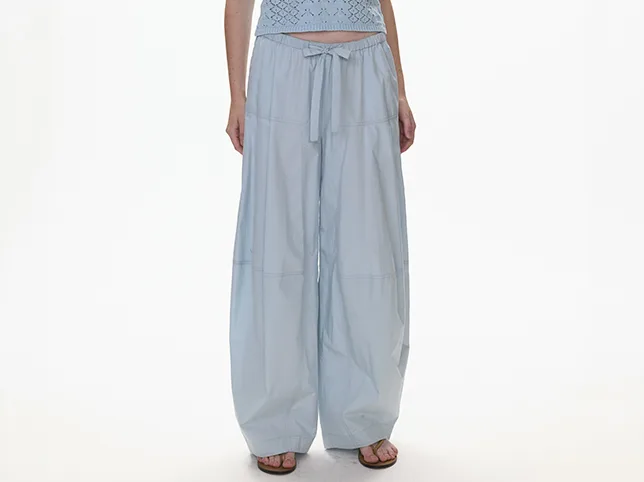
The same compositing applied to hemlines and leg openings. Trousers are where it matters most: two legs photographed at slightly different angles read immediately as wrong, and without an opening at the ankle a full-length piece looks flat along its whole bottom edge however good the neck joint is.

  • Leg and hem openings composited
  • Both legs matched in length and angle
  • Depth kept along the bottom edge
  • Full-length garments read three-dimensional
Try it on 3 images
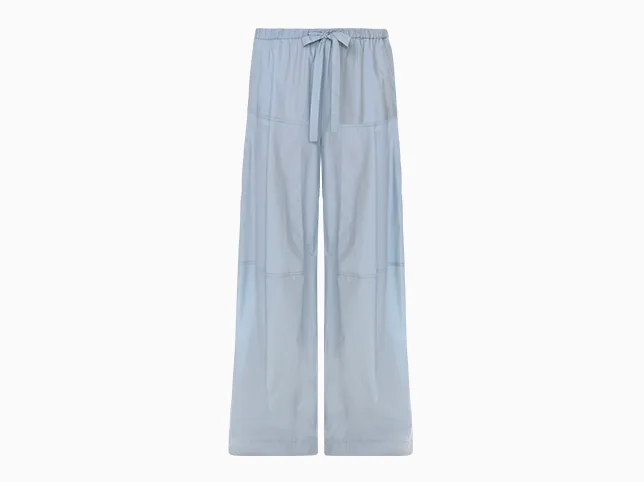
Light denim wide-leg trousers after the mannequin was removed and the waist tie kept in place
Light denim wide-leg trousers before the mannequin was removed and the waist tie kept in place
Before After
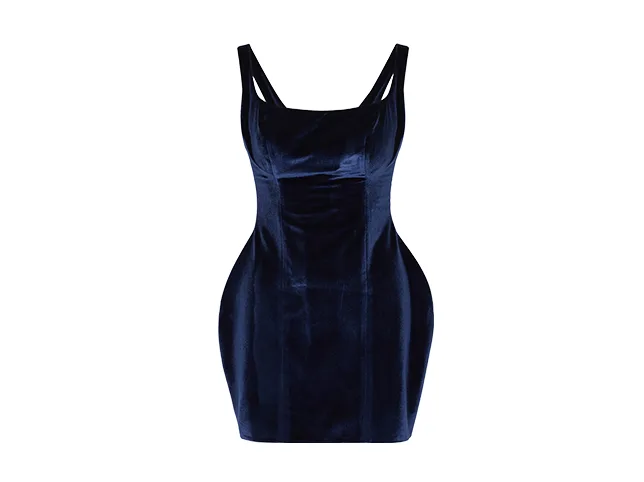
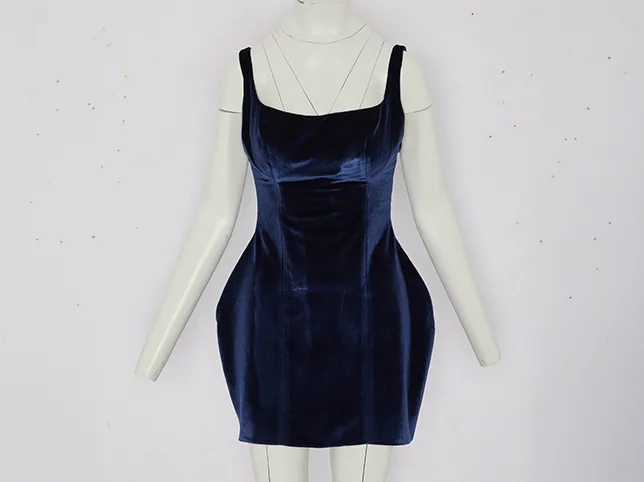
Navy velvet mini dress after the model was removed and the garment shaped to stand on its own
Navy velvet mini dress before the model was removed and the garment shaped to stand on its own
Before After

Symmetry Correction

Once the form comes out, the garment is squared up: shoulder lines aligned, straps matched, hems levelled, and the body shape evened where the mannequin was wider on one side. Uneven pieces are the most common reason a catalogue looks inconsistent when it is scrolled quickly.

  • Shoulder lines and straps aligned
  • Body shape evened left to right
  • Hems levelled across the frame
  • Consistent look down a catalogue grid
Try it on 3 images

Garment Shape Enhancement

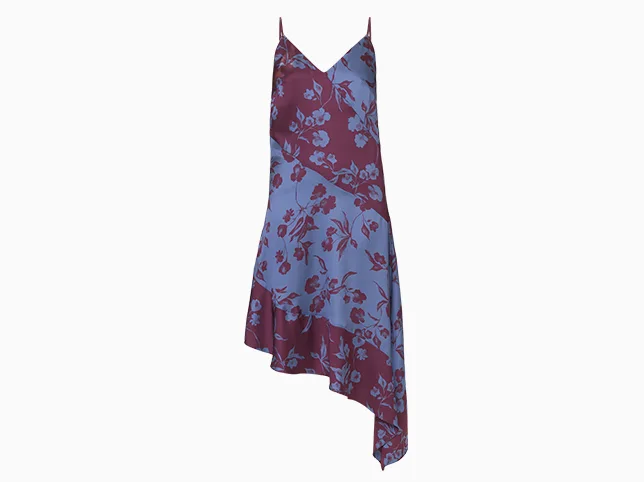
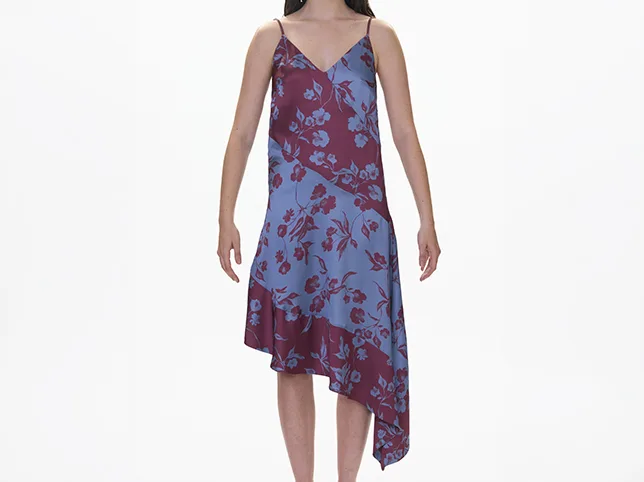
The silhouette is corrected so the piece looks worn rather than propped: volume balanced, the fall of the fabric preserved, and a deliberate asymmetric hem kept as designed rather than straightened out. Knowing which is the cut and which is the accident is the judgement in this row.

  • Body volume balanced and shaped
  • Natural fall of the fabric preserved
  • Designed asymmetry kept, not corrected
  • Garment reads worn, not propped
Try it on 3 images
Floral slip dress after the mannequin was removed and the straps and asymmetric hem kept intact
Floral slip dress before the mannequin was removed and the straps and asymmetric hem kept intact
Before After
Grey V-neck dress after the hanger and rail were removed and the neckline composited back
Grey V-neck dress before the hanger and rail were removed and the neckline composited back
Before After

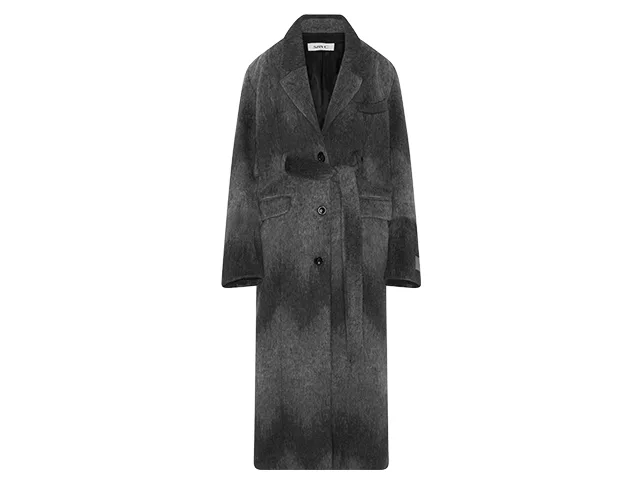
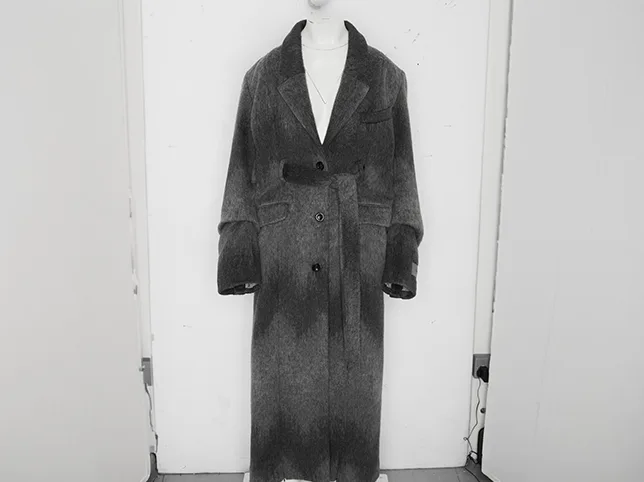
Outerwear and Multi-Joint Garments

Coats and layered pieces need the effect at the neck, at both cuffs and along the hem, with lining visible at every one of those openings. Each joint is a separate composite that has to agree with the others on light and colour, which is why outerwear takes longer per file than anything else on this page.

  • Neck, cuff and hem joints in one garment
  • Lining rebuilt at every opening
  • Joints matched for light and colour
  • Coats, parkas and layered pieces
Try it on 3 images

On-Model Shots Turned Into Ghost Mannequin

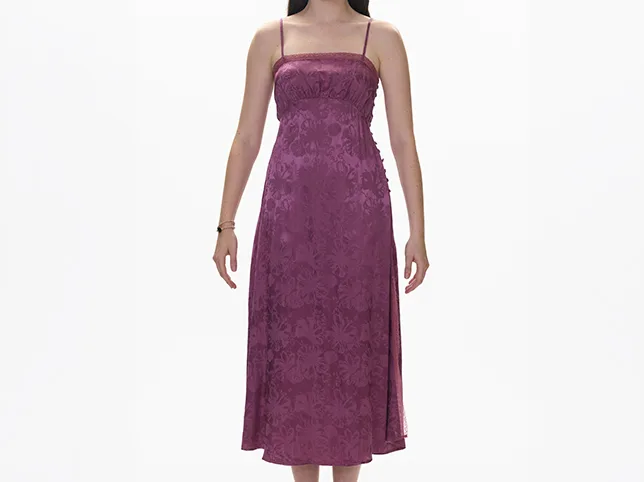
A shoot that already happened does not have to be repeated. The model is removed and the garment rebuilt where their arms, neck and hands were covering it, which is more work than a form - a mannequin is a known shape, a person is not - but it recovers a whole set of images that would otherwise be unusable as listing shots.

  • Model removed, garment rebuilt behind
  • Arms, neck and hands reconstructed
  • Existing shoots recovered without a reshoot
  • Same finish as a mannequin-shot piece
Try it on 3 images
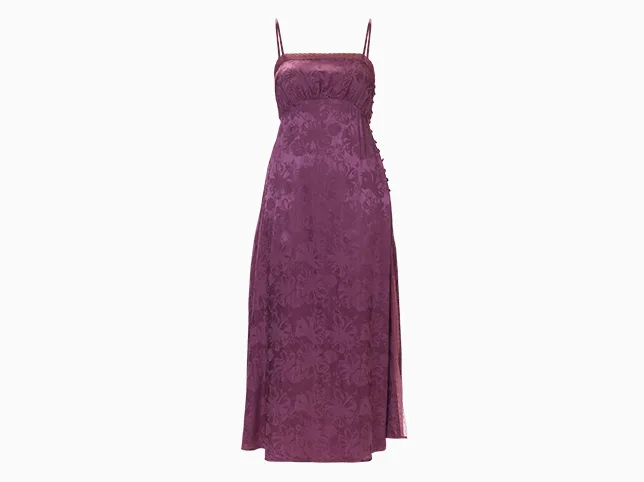
Purple textured slip dress after the mannequin was removed and the shoulder straps rebuilt
Purple textured slip dress before the mannequin was removed and the shoulder straps rebuilt
Before After
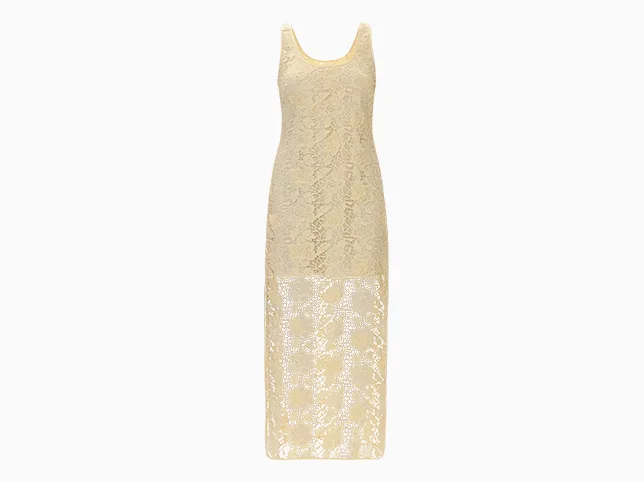
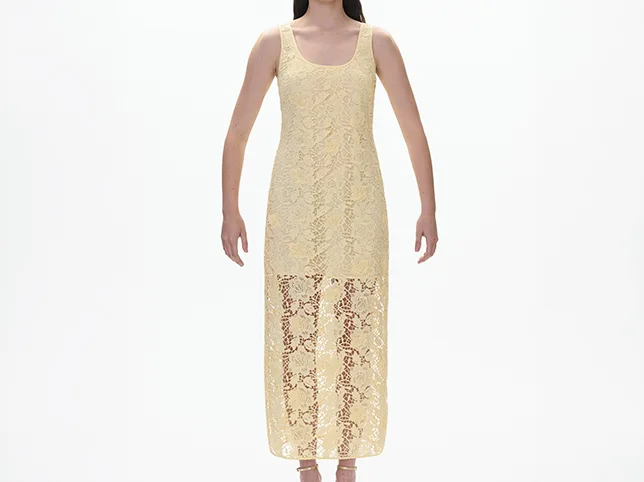
Cream lace dress after the mannequin was removed and the lace kept translucent at the edges
Cream lace dress before the mannequin was removed and the lace kept translucent at the edges
Before After

Sheer, Lace and Semi-Transparent Fabric

Lace and open weave break the assumption a cut-out rests on, which is that what sits behind the garment can be deleted: here it shows through, and has to be replaced behind the fabric while the fabric stays sheer. Masked on the channel rather than pathed, so the pattern survives instead of turning into a flat panel.

  • Transparency preserved through the weave
  • Background replaced behind the fabric
  • Channel masking, not a hard path
  • Lace pattern kept legible at zoom
Try it on 3 images

Skirts, Dresses and Hemlines

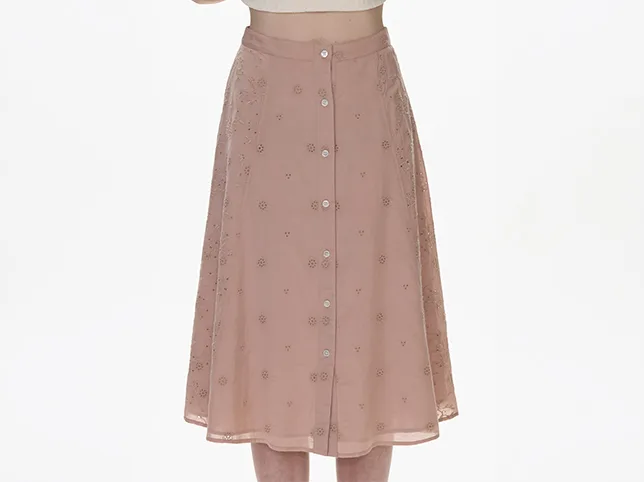
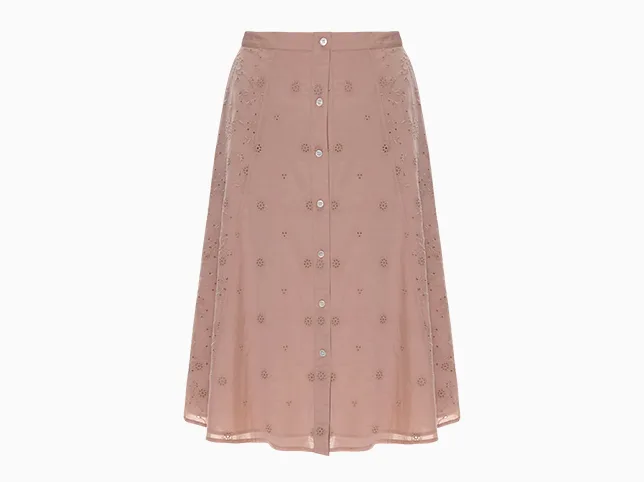
Garments with no neck to joint are a different job: the whole effect rests on the waistband, the hem opening and the fall of the fabric between them. The waist has to read as an opening rather than a cut edge, and the hem has to hang as it would on a body rather than flaring where the form was.

  • Waistband opened, not cut off
  • Hemline hung as it would fall on a body
  • Pleats and gathers kept as designed
  • Skirts, dresses and unstructured pieces
Try it on 3 images
Pink pleated midi skirt after the mannequin was removed and the waistband closed
Pink pleated midi skirt before the mannequin was removed and the waistband closed
Before After
Apparel categories

Ghost Mannequin Editing for Every Apparel Category

Garment construction decides the technique, and it comes down to which joints the effect needs and how much shape the fabric holds on its own. Six groups covering everything we edit, and what changes between them.

Structured tops: the collar has to come from a second frame

Shirts, blazers and anything with a placket and a lined collar are the textbook case. The inside back of the collar is never visible on the mannequin, so it is composited in from a second shot of the garment turned inside out, and the two frames have to agree on colour, weave direction and light. Lapels, vents and cuffs are rebuilt around that joint. This is the work the term “neck joint” actually refers to.

Heavy knit and fleece: no clean outline to cut

Chunky knits, hoodies and loose weave have no boundary a vector path can follow, because the edge is loose fibre against background. Cut it with a path and the garment comes back looking laser-trimmed. These are masked on the channel instead, so the fringe survives, and hood interiors get the same second-frame treatment as a collar — a hood photographs as a dark hole and has to be rebuilt as a lining.

Soft and unstructured: the form has to be implied

Jersey, loungewear, sleepwear and light dresses hold almost no shape on a form, so there is little volume in the frame to preserve. The edit is closer to sculpting than to cutting out: shoulders, waist and hem are shaped so the garment reads as worn rather than as fabric hung on a hook, without inventing structure the item does not have when it arrives.

Bottoms: two legs that must match

Jeans, trousers and skirts move the joint from the neck to the hem, and add a symmetry problem the top half never has: two legs photographed at slightly different angles read immediately as wrong. Waistbands are opened, ankle and hem joints composited, and pleats, creases, denim wash and stitching kept rather than smoothed — wash variation is the product on denim, not a defect.

Sheer and lace: the background shows through the garment

Lingerie, swimwear, chiffon and mesh break the basic assumption of a cut-out, which is that what is behind the subject can be deleted. Here it is visible through the fabric and has to be replaced behind semi-transparent fibre while the transparency itself survives. That is alpha and channel work. Elastic shape and strap symmetry are corrected at the same time, because both distort on the form.

Outerwear: several joints in one garment

Parkas, coats and layered pieces need the effect at the neck, at both cuffs and often at the hem, with lining visible at every one of those openings. Each joint is a separate composite that has to agree with the others on light and colour, which is why outerwear takes longer per file than anything else on this page and is quoted accordingly.

Who we work with

Who Uses Our Ghost Mannequin Services?

From single-line labels to catalogue teams shipping thousands of SKUs a season.

Fashion brands: one standard, four drops a year

A collection is photographed over days or weeks and goes live as one page, so the standard has to be written down rather than remembered. Background, shadow weight, crop ratio and how much shape to give an unstructured garment are recorded on the first order and applied to every drop after it, including the ones shot by a different photographer in a different studio.

Apparel manufacturers: line sheets, not listings

Wholesale imagery is judged by buyers comparing construction across a range, which puts the weight on accurate shape and true fabric colour rather than on styling. Volume is the other half of it: a line sheet is hundreds of pieces to one deadline, and it has to look like one shoot even when it was not.

Fashion photographers: delivered under your name

Ghost mannequin is a post-production job that eats a shooting day, which is why photographers hand it over. Files come back unbranded in your naming and folder convention, ready to deliver as your own work. We do not contact your client and we are not credited in the delivery.

eCommerce agencies: overflow that arrives finished

Agencies use us when a client catalogue lands on a deadline they cannot staff. The value is not the per-image price, it is that a batch comes back needing no internal QC pass, because a second editor has already checked every file against the brief and against the rest of the set.

Resale and print-on-demand: stock you did not shoot

Resale platforms and print-on-demand brands work from imagery of wildly mixed origin — supplier photographs, seller phone shots, one template reused across every artwork variant. The job is normalising that into something that reads as a single catalogue, which is a consistency problem before it is a retouching one.

Why it converts

Why Ghost Mannequin Images Convert Better

Flat lay and ghost mannequin cost about the same to produce. What separates them is how much of the buyer’s question the image answers before they have to ask it.

It answers the fit question in the thumbnail

A flat photograph shows a garment’s colour and its print. It does not show cut, volume or how the fabric falls, which is what a buyer is actually trying to work out. Holding the shape puts that in the first image, before anyone has clicked through to the size chart.

Expectations set in the image are the ones the parcel has to meet

Returns cluster where the listing implied something the garment does not do — more structure, a different drape, a colour a degree off. An image that shows the real shape and the real fabric colour is not a presentation decision so much as a way of not promising the wrong thing.

A collection page is judged as one image, not twenty

Shoppers read a grid before they read any single listing in it. One background, one shadow depth and one crop ratio is what makes twenty separately photographed garments look like a considered range rather than a marketplace feed.

Nothing in the frame competes with the product

No mannequin, no hanger, no model whose styling dates the shot or narrows who thinks the garment is for them. It also means the same photograph stays usable across a season, a marketplace listing and a wholesale line sheet without being reshot for each.

Compare the options

Ghost Mannequin vs Flat Lay vs Model Photography

All three sell clothing. They differ in what they cost to produce, what they prove to a buyer, and how much editing each frame needs afterwards.

Factor Ghost mannequin Flat lay Model photography
CostLow overall — one mannequin, two frames per garmentLowest — no form or model neededHighest — model, stylist, studio, usage rights
ConversionStrong for listing imagesWeakest of the three for apparelStrongest for campaign and social
Apparel visibilityFull shape, drape and fit, nothing obscuredColour and pattern only, no 3D formGarment competes with styling and pose
Brand consistencyVery high — identical treatment at any volumeHigh, but flat across the catalogueVaries with model, light and location
Photography costMannequin and two frames per pieceSweep and overhead rig onlyDay rate, casting and location hire
Editing timeModerate — compositing per garmentMinimal — background and cropHigh — skin, fabric and background retouching
Marketplace compatibilityMeets Amazon, Shopify and eBay apparel rules directlyAccepted, but weaker in competitive categoriesOften restricted as a main listing image

Benchmarking quotes? See what neck joint services cost.

Why us

Why Apparel Brands Send Us the Neck Joints

10+ years of experience

Producing apparel imagery for brands and photographers since 2014.

Dedicated apparel editors

Retouchers who work on garments daily, not generalists rotating between categories.

100% human editing

Every file built by hand in Adobe Photoshop. No automated background removers.

ISO-level quality control

A two-step check against your written style guide before anything is delivered.

Fast turnaround

24-hour standard across two production sites running around the clock.

Flexible pricing

No minimum order, and discounts of up to 50% above 100 images.

Enterprise workflow

FTP integration, named account teams and agreed timelines for catalogue batches.

Secure file handling

Confidential handling of unreleased collections, with NDAs on request.

Marketplace ready

Marketplace Optimised Apparel Images

Tell us the destination once and its specification is applied to every batch. Our Amazon product image editing service covers listing rules in more detail.

Amazon product images

Pure white, roughly 85% frame fill, compliant dimensions and file naming.

Shopify clothing stores

Square or 4:5 crops sized to the theme grid, shadow depth held constant.

WooCommerce

Consistent aspect ratios and transparent PNG variants for theme flexibility.

BigCommerce

Zoom-ready resolution without exceeding platform file size limits.

Magento

Multi-store catalogues exported to one naming and sizing convention.

eBay

Minimum longest-side dimensions met, with clean white for the gallery thumbnail.

Etsy

Landscape-first crops that survive the marketplace’s thumbnail cropping.

Fashion catalogues

CMYK-ready TIFF output for print alongside the web-sized set.

Our workflow

Our Apparel Retouching Workflow

The same four stages run on a three-image trial and a four-thousand-image season.

  1. 01

    Ghost mannequin

    Form removed, interior composited, joints built at neck, sleeve and hem.

  2. 02

    Retouching

    Shape, symmetry, wrinkles, threads, colour and shadow corrected.

  3. 03

    Quality control

    Second editor checks the file against your written style guide.

  4. 04

    Delivery

    Sized, formatted and delivered by link or FTP within 24 hours.

Pricing

Ghost Mannequin Pricing, per Image

Starting rates for standard complexity. There is no minimum order, and bulk orders of 10 or more images qualify for discounted custom pricing.
Basic neck joint
Basic neck joint

Simple tops — t-shirts, polos and blouses with a straightforward collar.
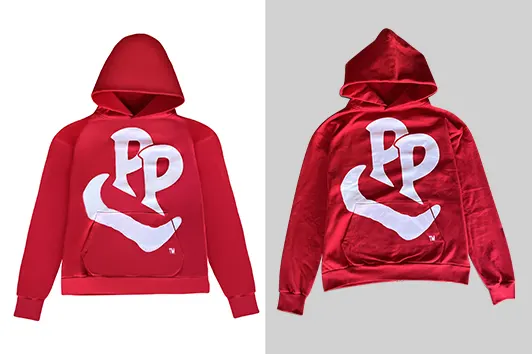
From $0.50 Try it free
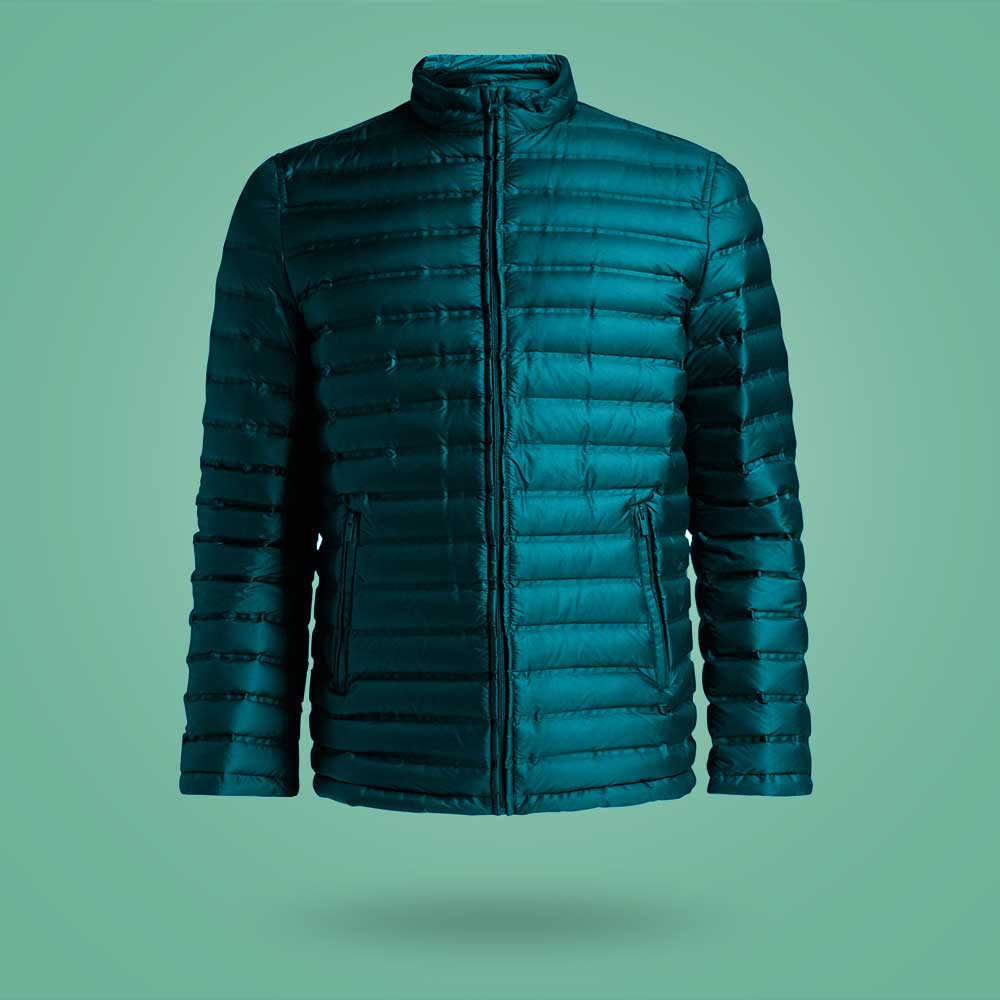
Full neck joint + white background

Neck joint plus background cleanup and colour correction, listing-ready.
From $0.80 Try it free
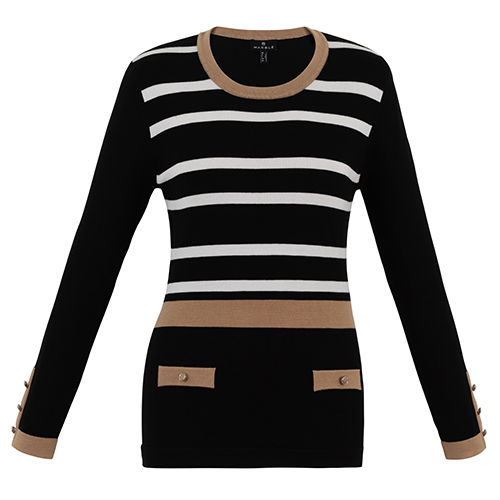
Professional (neck + sleeve joint)

Long-sleeve garments needing cuff compositing as well as the collar.
From $1.00 Try it free
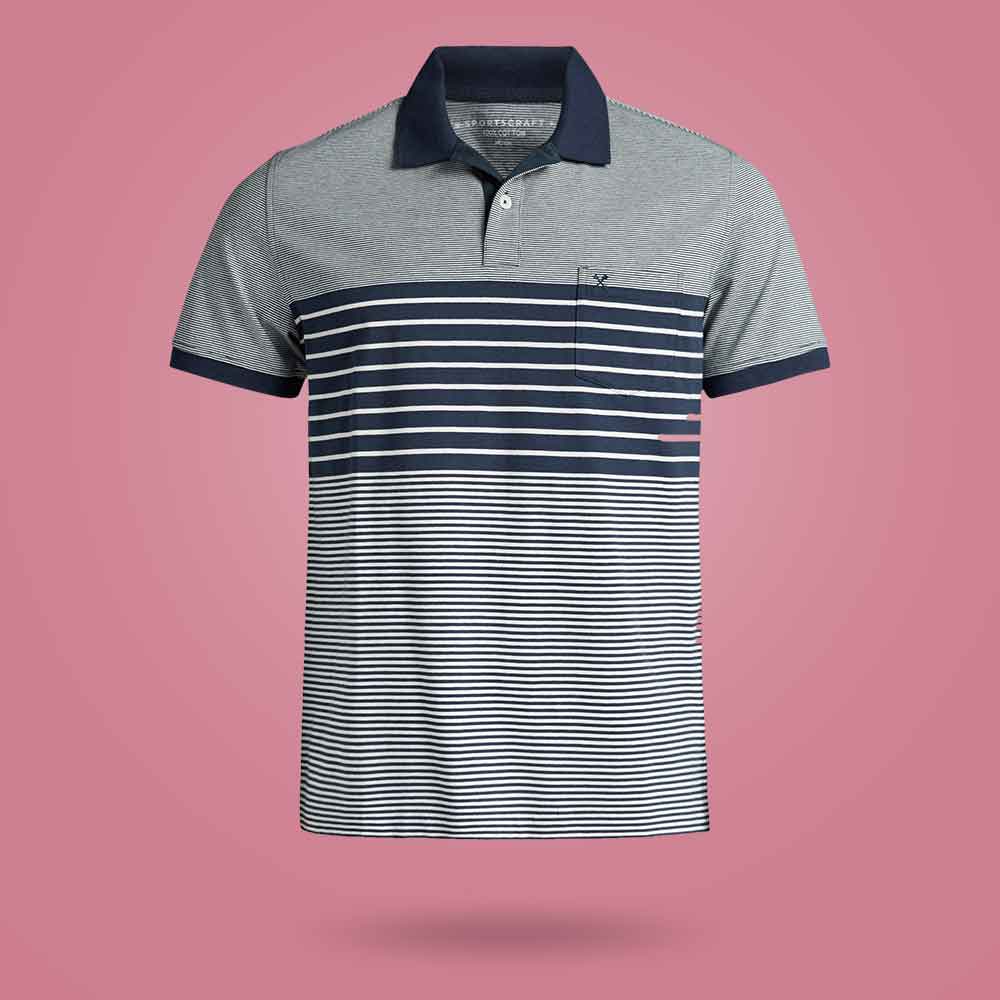
Outerwear / multi-joint compositing

Jackets and coats with neck, sleeve and hem joints in one file.
From $1.50 Try it free
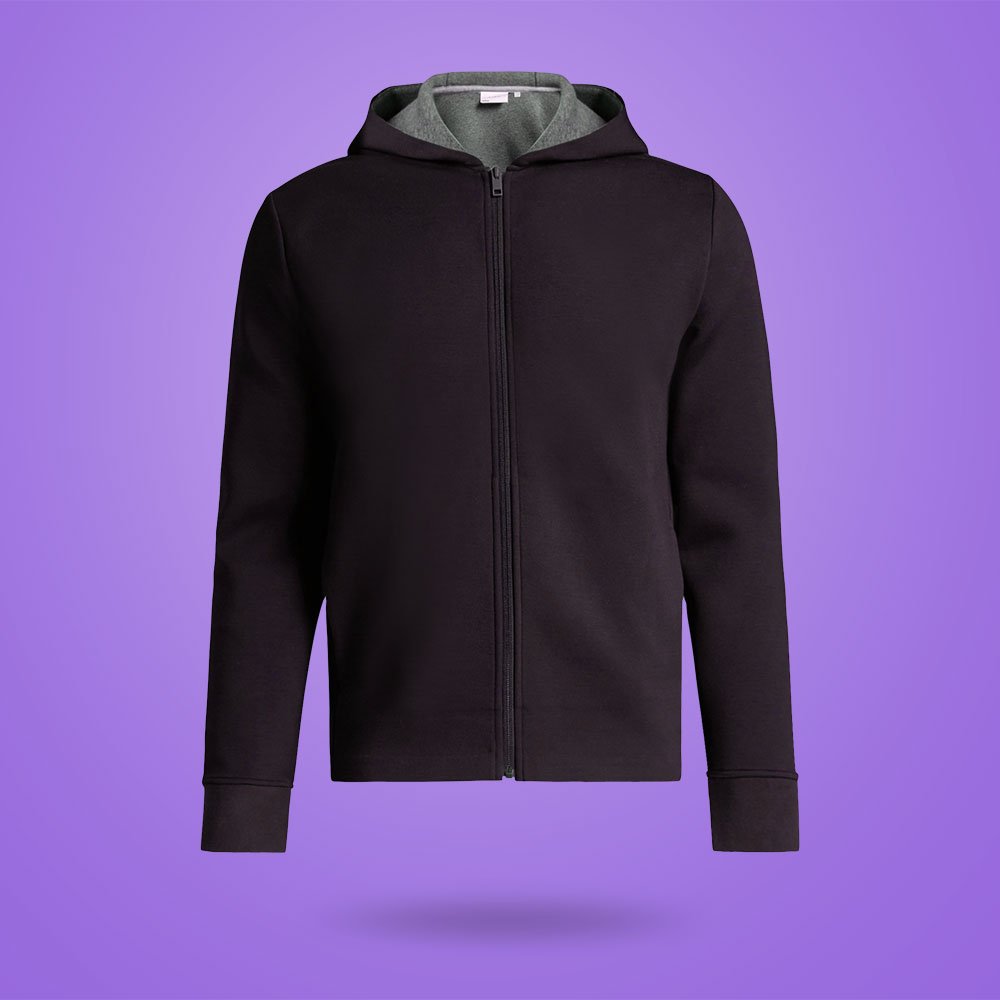
Model-to-ghost conversion

Removing a live model while retaining the garment’s shape and drape.
From $1.50 Try it free
High-end + advanced retouching

Campaign-grade fabric, shape and colour work on top of the joint.

From $2.00 Try it free
Shooting guide

Photography Guide Before Sending Images

Most of what makes a ghost mannequin image work is decided at the shoot, before a retoucher opens the file.

Camera setup

Shoot tethered where possible, at f/8–f/11 for full garment sharpness, camera square to the mannequin at chest height. Keep focal length consistent across the catalogue.

Lighting

Two softboxes at 45 degrees plus a background light removes the shadow that would otherwise contaminate the collar composite. Lock exposure and white balance for the session.

Garment preparation

Steam every piece and lint-roll dark fabrics. Removing a crease at the shoot costs seconds; removing it in Photoshop is billable editing time.

Mannequin selection

Use a magnetic or collapsible form sized to the garment. A form that stretches the piece produces a shape no amount of editing can correct back.

Required angles

Front, back and the interior collar at minimum. Add interior cuffs and hem for long-sleeve and full-length pieces so those joints can be composited rather than painted.

File formats

RAW is ideal; TIFF and high-quality JPEG both work. Keep files unedited and uncropped — we would rather start from your original capture.

Common questions

Frequently Asked Questions

What to shoot, what it costs, and what happens with the awkward fabrics. Prices and turnaround on this page were last reviewed in August 2026.

What is ghost mannequin editing?

Ghost mannequin editing (also called invisible mannequin or neck joint service) is a Photoshop technique that removes a mannequin from clothing photographs while preserving the garment’s natural three-dimensional shape. The garment is photographed front, back and interior, then those frames are composited together and the mannequin removed to create a hollow, floating clothing image.

What is neck joint editing?

Neck joint is the specific step inside a ghost mannequin edit where the interior collar photograph is composited into the neck opening, so the garment shows real depth instead of a flat hole. Sleeve joint and bottom joint apply the same method at the cuffs and hem.

Do I need to provide interior shots?

They are strongly recommended but not mandatory. With an interior frame we composite a real photograph into the opening. Without one, our retouchers recreate the collar or hem fill using cloning and painting tools — still professional for most garments, but less exact for high-end fashion where realism is critical.

Can you edit hoodies and heavy knitwear?

Yes. Hoods, drawstrings and chunky knit edges are handled with image masking rather than a hard vector path, because loose fibres and open weave need channel and alpha masks to stay natural. Hoodies are one of our highest-volume categories.

Can you remove wrinkles and creases?

Yes, wrinkle removal is included in the standard edit. Creases from the mannequin, packaging and handling are removed while genuine fabric texture and intentional folds are preserved. Steaming garments before the shoot still produces the best result.

What is the turnaround time?

Standard turnaround is 24 hours for most orders, and 24–48 hours for complex multi-joint work. For large catalogue batches we agree a timeline upfront and meet it. Rush and same-day editing is available for urgent orders.

Do you deliver layered PSD files?

Yes, on request. A flattened JPEG, PNG or TIFF is standard, and we can supply the layered PSD alongside it so your team can adjust the composite in-house later.

Do you offer bulk discounts?

Yes. Bulk orders of 10 or more images qualify for discounted custom pricing, and orders above 100 images qualify for discounts of up to 50%. Send a representative sample and we will quote the whole batch upfront.

What file formats do you accept?

JPEG, PNG, TIFF and RAW from any camera. If you shoot tethered or work in layered PSD, send those too and we will keep the layer structure intact. For high volume we can connect directly to your FTP server.

Do you meet marketplace image requirements?

Yes. Amazon listings are returned on pure white with the garment filling roughly 85% of the frame at compliant dimensions. Shopify, eBay and Etsy work is matched to each platform’s grid, aspect ratio and file size limits.

Can you place garments on a white background?

Yes, white background cleanup is included in the standard ghost mannequin edit. Custom background colours, transparent PNGs and lifestyle backgrounds are all available on the same order.

Can you edit transparent or sheer garments?

Yes. Lace, mesh, chiffon and sheer panels are edited with channel and alpha masking so the semi-transparent fibres survive, rather than being clipped away by a hard outline. Swimwear and lingerie are regular categories for us.

Can you recreate a missing collar?

Yes. Where no interior frame exists, or the collar was distorted by the form, our retouchers rebuild the opening by hand so it reads symmetrically. Providing an interior shot will always produce a more natural result.

Is there a minimum order?

No. You can send a single image, or start with the free trial of three garments. There is no minimum quantity and no sign-up required.

What is your revision policy?

Revisions are unlimited and free. We keep working on an image until you are satisfied with it, and if revisions still do not resolve the issue a money-back guarantee applies.

Related Apparel Photo Editing Services

Ghost mannequin work pairs naturally with apparel photo editing, clipping path work and our colour change service for building colourways without a reshoot.

This page covers the technique. What changes when you are running it as a streetwear label, an online boutique or a Poshmark reseller is set out on those pages instead.

Get started

Start Your Free Ghost Mannequin Trial

Send three garments with your mannequin and interior frames. We will edit them to your specification and return them within 24 hours — no credit card, no sign-up, no obligation to continue.

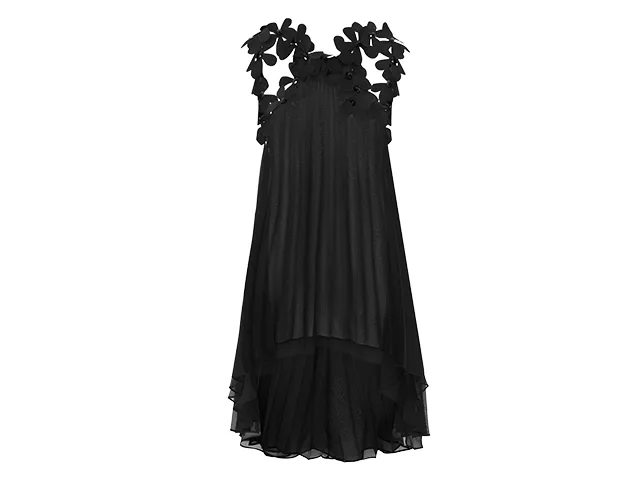
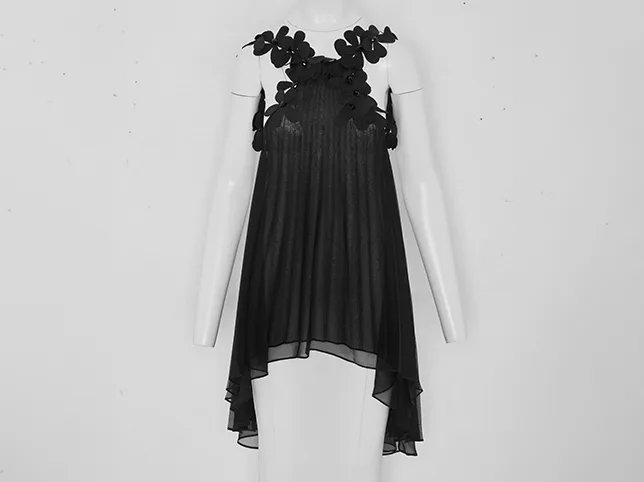
Black pleated dress after the mannequin was removed and the neckline and hem composited back
Black pleated dress before the mannequin was removed and the neckline and hem composited back
Before After
Scroll to Top