ISO-certified studio · 80+ retouchers · 3M+ images +65 9050 7285 [email protected] Open 24 hours
Start a Free Trial
Built for print-on-demand Print-on-demand mockup editing

Mockup Editing & Product Retouching for Print-on-Demand

Professional mockup editing for print-on-demand sellers, hand-composited from $0.50 an image. You never photograph what you sell, so the listing rests on the mockup: a real print follows the fold, dims where the fabric turns and picks up the weave. Pixel Retouching has run print-on-demand mockup editing since 2014, from ISO-certified studios in Singapore and Dhaka.
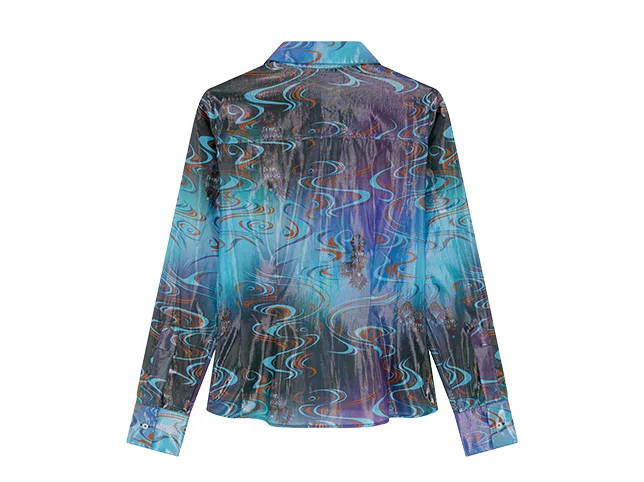
Printed shirt after retouching Printed shirt before retouching After editBefore

Hover to see before

Send one design and one blank. We will place it three ways so you can see the difference.

$0.50 per image
24h standard turnaround
3M+ images edited

Hand-composited work, at print-on-demand volumes

One design across forty products is a normal order here, and every placement is done by a person rather than a batch action.


ZEELUM
SQUARESHOT
soona
Pro Product Photo
OMS Photo
Prop Photo Studio
Northlane
VANTRA
Lumeo
Kindred & Co.
Atelier Nine
HALCYON
ZEELUM
SQUARESHOT
soona
Pro Product Photo
OMS Photo
Prop Photo Studio
Northlane
VANTRA
Lumeo
Kindred & Co.
Atelier Nine
HALCYON
3M+Images processed
80+In-house retouchers
8,000+Images a day
200+Brands worldwide
The real constraint

Why Most Print-on-Demand Mockups Look Fake

The generator did the easy part. What it skipped is exactly what a shopper notices without being able to name it.

Artwork pasted flat on cloth

Fabric is not a plane. A print that stays perfectly rectangular across a chest that curves, or ignores the fold at the sleeve, reads as fake instantly even to someone who could not explain why.

Print ignoring the light

Real ink dims where the garment turns away from the light and brightens where it catches. Artwork at uniform brightness across a shadowed fold is the single most common tell in the category.

Screen colour is not print colour

A vivid on-screen blue can be well outside what the printer can reproduce on a dark cotton. The customer receives something duller than the listing, and the refund is yours, not the printer’s.

Forty products, forty placements

One design across a range means forty separate placement decisions, each needing correct scale and position for its blank. Automated at scale, that is where the obvious mistakes appear.

Delivery spec

What We Deliver for Print-on-Demand

Placement done as compositing rather than pasting, and colour checked against what will actually print.

Placement
Warped to the garment, following folds and drape
Lighting
Print picking up the shadow and highlight of the fabric
Texture
Weave showing through the ink as it does in reality
Colour
Checked against what your print method can reproduce
Range
One design composited across every product and colourway
Turnaround
24 hours standard, faster on single designs

Tell us the printing method — DTG, screen print, sublimation, embroidery — because each one reproduces colour and fine detail differently, and the mockup should reflect the one you use.

What we edit

What We Edit for a Print-on-Demand Seller

Five jobs that turn a generated mockup into something believable. Each links to the service page behind the technique.
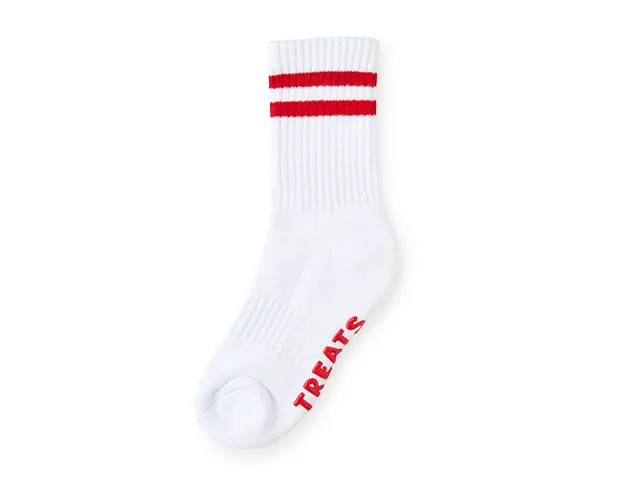
White ribbed socks with a red stripe and printed text after editing that keeps the print following the rib
White ribbed socks with a red stripe and printed text before editing that keeps the print following the rib
Before After

Print That Follows the Fabric

The artwork is warped to the actual surface it sits on, so it curves across a chest, breaks at a fold and distorts along a sleeve exactly as printed ink does. This one change is the difference between a mockup that sells and one that quietly signals dropship.

  • Artwork warped to the garment surface
  • Folds, drape and curvature respected
  • Fabric weave showing through the ink
  • Print dimmed and lifted with the light

How this is done: Colour Change

Try it on 3 images
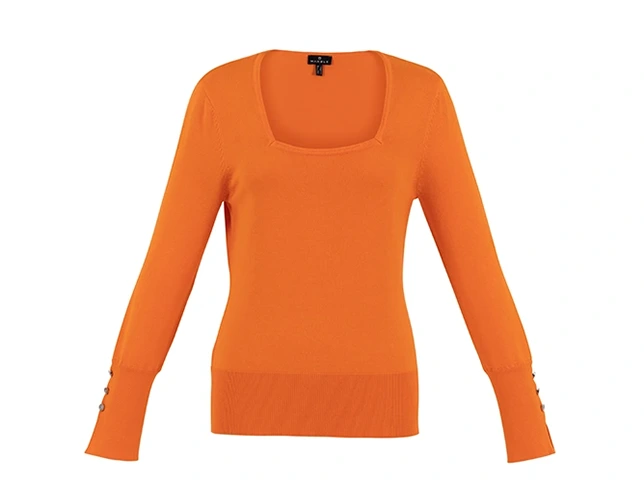
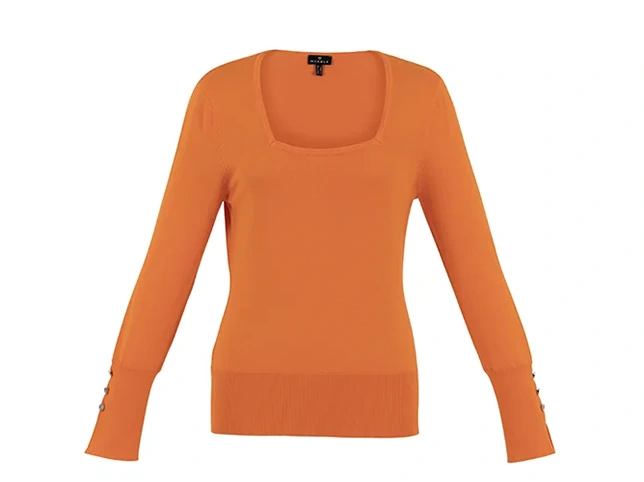
Blanks Matched to the Real Garment

The blank in your mockup has to be the colour of the blank your printer actually ships, or every design on it is wrong before the artwork is even placed. Each base garment is corrected against a physical sample once and then reused, so a hundred listings built on that blank all start from the same colour rather than from whatever the stock photograph looked like.

  • Base garment matched to a physical sample
  • Corrected once, reused across every design
  • Rib, weave and seam shadow left as shot
  • Consistent starting point for the whole range

How this is done: Colour Change

Try it on 3 images
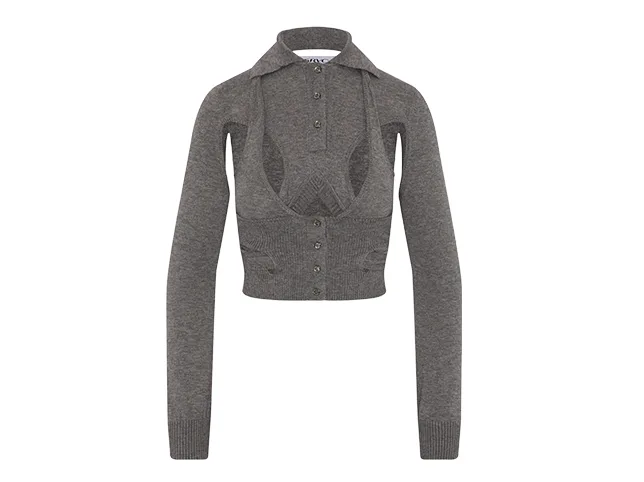
Enhanced apparel photo after professional color correction and retouching for a vibrant, high-quality look
Unedited clothing product image before color correction for e-commerce and fashion photography
Before After
Grey cropped zip jacket used as a blank after cleanup before artwork is applied
Grey cropped zip jacket used as a blank before cleanup before artwork is applied
Before After

Blanks Cleaned Before the Artwork Lands

Half the fake look comes from the blank, not the print. Stock garment photographs arrive with creases, uneven lighting and a background that does not match the rest of your range, and all of that shows straight through the composite.

  • Blank creases and lint cleaned
  • Lighting evened across the range
  • One consistent background
  • Colour of the blank corrected to true

How this is done: eCommerce Photo Editing

Try it on 3 images

Edges the Composite Cannot Fake

Hoodie drawcords, fringing, hair over a collar and anything the artwork has to sit behind need real masking rather than a rectangle. Without it the print visibly crosses over a cord or a strand and the whole composite collapses.

  • Cords, fringes and strands masked per pixel
  • Artwork correctly layered behind detail
  • No hard edge where the print meets a fold
  • Transparent PNG plus the layered file

How this is done: Image Masking

Try it on 3 images
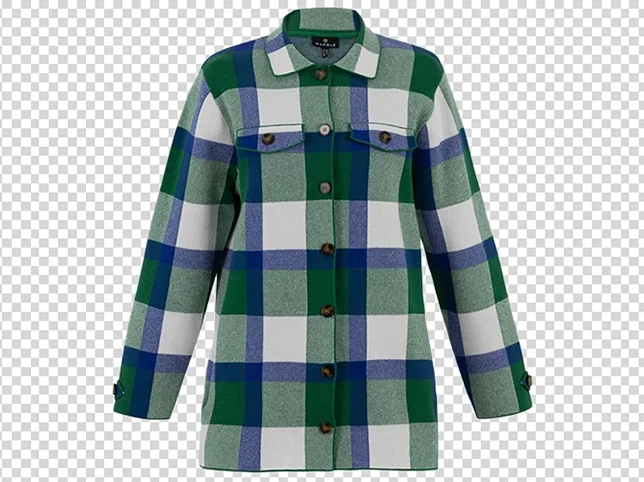
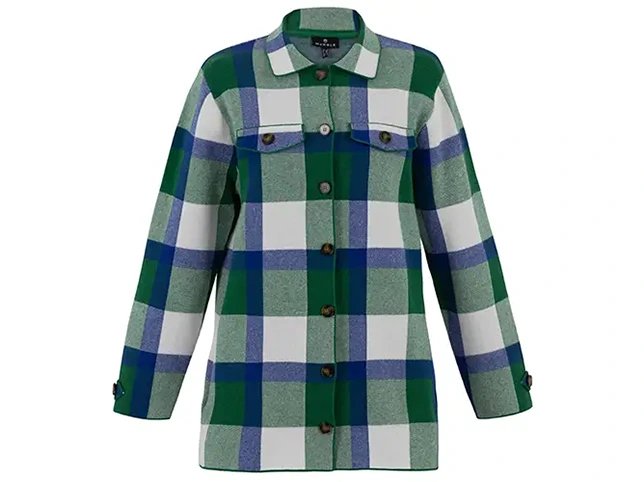
Apparel photo after background removal with a clean, white background for e-commerce optimization.
Edges the Composite Cannot Fake before editing
Before After
Outerwear and Structured Blanks after editing
Close-up of clothing fabric with imperfections before professional high-end photo retouching.
Before After

Outerwear and Structured Blanks

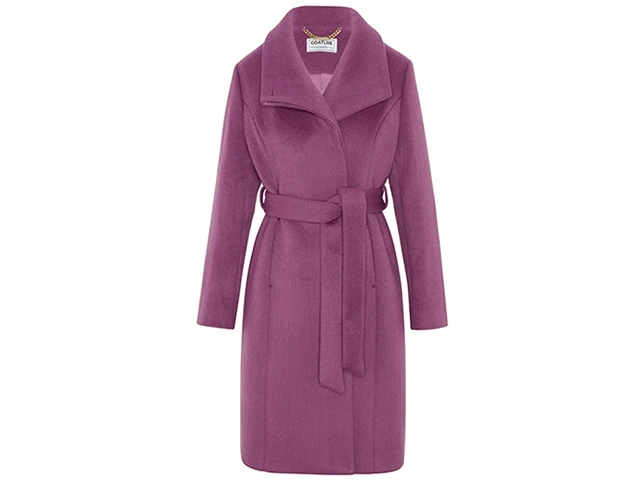
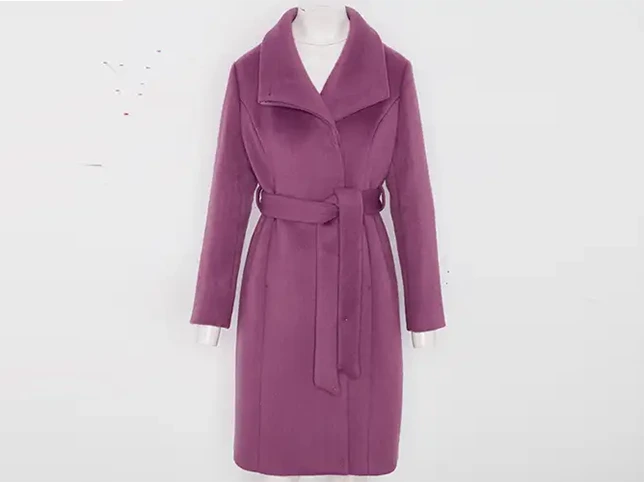
A coat is a harder blank than a tee. It has a collar, a belt, a lining that shows at the opening and a drape that has to survive the form coming out, and artwork placed on it has to follow a surface that curves in two directions rather than lying flat. Prepared properly once, the same blank carries every design you put on it.

  • Collar, belt and lining rebuilt
  • Drape kept after the form is removed
  • Artwork follows a curved surface
  • One blank reused across every design

How this is done: Ghost Mannequin

Try it on 3 images
The services behind it

The Services Print-on-Demand Bundles

Colour work, compositing, masking and the listing edit. Each page carries its own rate and before-and-after.

How it runs

How a Print-on-Demand Order Runs

Set the placement rules once, then apply them across the range.

  1. 01

    Send the artwork, the blanks and the print method

    The print method matters as much as the files. DTG, screen print, sublimation and embroidery each reproduce colour and fine detail differently, and the mockup should reflect yours.

  2. 02

    We composite one product first

    Placement, scale and how far the print follows the fabric are agreed on a single product before the range is built, because those decisions repeat forty times.

  3. 03

    Hand-composited across the range

    Each product placed by a person at the right scale for that blank, then the whole set reviewed together rather than individually.

  4. 04

    Delivered per product and colourway

    Named so they map onto your listings, in the sizes each channel needs. Revisions are unlimited.

Common questions

Frequently Asked Questions

Why do my print-on-demand mockups look fake?

Almost always because the artwork was pasted flat. Real ink curves with the chest, breaks at a fold, dims in shadow and lets the weave show through. A generator skips all four, and shoppers register the result as wrong without being able to say why. Fixing the warp and the lighting is the single biggest improvement available.

Can you match the mockup to what my printer actually produces?

Yes, and it is worth doing. Tell us the print method and, ideally, send a photograph of a printed sample. A vivid on-screen colour is often unreachable in DTG on dark cotton, and a listing that promises it collects refunds. We would rather show a slightly duller mockup that arrives as promised.

Do you work with the mockup generators I already use?

Yes. Send whatever your generator produced and we correct it — warp, lighting, edges and colour. That is usually cheaper than compositing from scratch, and it keeps the blanks you have already standardised on. Where a generated file is too low-resolution to rescue we will tell you.

Can you put one design across a whole product range?

Yes, and it is the most common order in this category. Each product gets its own placement and scale rather than one pasted size, then the range is checked as a set. Volume discounts start at ten images, so a full range usually qualifies.

Do you edit the artwork itself, or only the mockup?

Both, if you want. Most orders are mockup work, but we can also clean up, resize and colour-separate artwork for a specific print method. Tell us what the printer needs and we will prepare files to it — though we do not create original designs.

How does this differ from your eCommerce photo editing service?

The eCommerce service edits a photograph of a real product. Here the product does not exist yet, so the work is compositing and colour prediction rather than retouching. Different problem, same studio and the same price list, and the rows above link to the services that supply each technique.

Can you handle embroidery and mugs, not just apparel?

Yes. Embroidery needs the thread texture and the slight raise built rather than a flat print, and hard goods like mugs and cases need the artwork wrapped around a curved surface with the right specular highlight. Both are compositing problems, priced the same way.

How do I test it?

Send one design and one blank through the free trial. We will place it and you can compare it against your generator output side by side — which is the fastest way to judge whether the difference is worth paying for. No card, no account.

Get started

Send One Design and One Blank

Put our version next to your generator’s and the difference either justifies the cost or it does not. Ten seconds to decide.

Scroll to Top