Jewelry photography demands precision. Small details, reflective surfaces, and intricate craftsmanship require equipment that can capture every facet without distortion or blur. Choosing the right camera and lens combination directly affects image quality, customer trust, and ultimately, sales. This guide breaks down the essential gear options based on budget, skill level, and business needs, helping you make an informed decision without unnecessary complexity.
Why Your Camera Choice Directly Impacts Jewelry Sales
Low-quality images create doubt. When customers cannot see the clarity of a gemstone cut or the finish on a metal band, they hesitate to purchase. High-resolution photography builds confidence by showing products exactly as they appear in person. Cameras with sensors ranging from 24 to 60+ megapixels allow for significant cropping while maintaining detail, which is essential when photographing small items like earrings or delicate chains. This level of clarity reduces return rates and supports marketing across multiple platforms, from social media to print catalogs.
4 Essential Camera Features for Jewelry Photography You Should Know
1. High-Resolution Sensor (24MP Minimum, 45MP+ Ideal)
Megapixel count determines how much detail your camera can record. For jewelry, where texture and precision matter, higher resolution provides flexibility in post-production. Cameras like the Sony Alpha A7R IV (61MP), Canon EOS R5 (45MP), and Nikon Z8 (45MP) deliver the pixel density needed to showcase fine engraving, stone settings, and metal grain without losing sharpness when zoomed or cropped.
2. Full-Frame Vs. Crop Sensor: Practical Considerations
Full-frame sensors offer superior dynamic range and low-light performance, making them ideal for professional studios where lighting control is consistent. Crop sensors, such as those in the Sony a6700 or Nikon Z50, provide a more affordable entry point while still delivering excellent results for web-based sales. The crop factor can even extend the effective reach of macro lenses, which may benefit certain shooting scenarios. Choose based on your output needs: full-frame for large-format printing or high-end e-commerce, crop sensor for online stores and social media.
3. Manual Control and Focus Precision
Automatic settings rarely suffice for jewelry work. Look for cameras that offer manual exposure controls, focus peaking, and focus bracketing. These features allow precise adjustments to aperture, shutter speed, and focus points—critical when working with shallow depth of field at close distances. Focus bracketing, in particular, enables the capture of multiple images at varying focus distances, which can later be combined to achieve front-to-back sharpness.
4. Macro Lens Compatibility
The lens matters as much as the camera body. A true macro lens provides 1:1 reproduction, meaning the subject appears life-size on the sensor. This capability is non-negotiable for capturing small jewelry items with accurate scale and detail. Ensure your chosen camera system supports high-quality macro optics. Canon RF, Sony E, and Nikon Z mounts all offer dedicated macro lenses designed for their respective systems.
Top Camera and Lens Combinations by Budget Tier
Selecting equipment for jewelry photography requires balancing image quality, working distance, and budget. The following combinations are organized by investment level, with each pairing chosen for its ability to handle the specific challenges of photographing small, reflective objects.
Professional Tier: Maximum Detail and Flexibility
Photographers working with high-value pieces, luxury brands, or clients requiring print-ready files benefit from equipment that delivers exceptional resolution and optical precision.
Sony Alpha A7R IV with Sony FE 90mm f/2.8 Macro G OSS: The A7R IV features a 61-megapixel full-frame sensor, providing extensive cropping capability without sacrificing detail. This resolution is valuable when photographing intricate settings or when clients request multiple crops from a single image. The paired 90mm macro lens offers 1:1 reproduction with a comfortable working distance, reducing the likelihood of the camera or photographer casting shadows on reflective surfaces. Optical stabilization supports handheld shooting when necessary, though tripod use remains standard for focus stacking workflows. The lens minimizes chromatic aberration, preserving accurate color rendition in gemstones and polished metals.
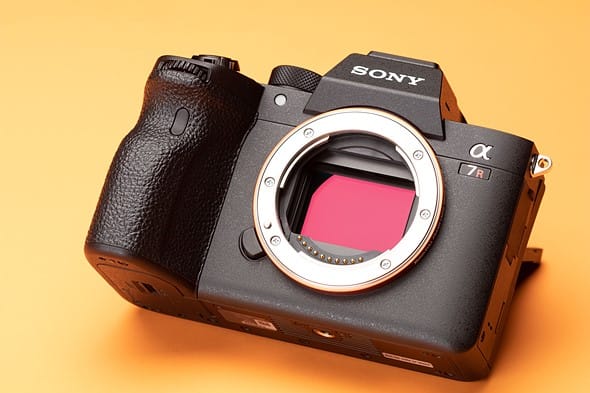
Image Source: DPReview
Canon EOS R5 with Canon RF 100mm f/2.8L Macro IS USM: The EOS R5 combines a 45-megapixel sensor with advanced autofocus and in-body image stabilization. Its RF mount supports the dedicated 100mm macro lens, which includes hybrid stabilization effective for both stills and video. This combination excels in controlled studio environments where lighting is managed precisely. The 100mm focal length provides subject isolation and sufficient distance to position lights without obstruction. The L-series optics maintain sharpness across the frame, even at wider apertures, allowing flexibility in depth of field control.
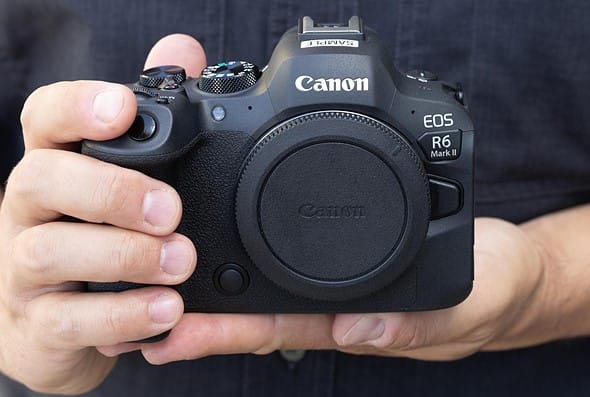
Image Source: DPReview
Nikon Z8 with Nikon Z MC 105mm f/2.8 VR S: The Z8 delivers 45-megapixel resolution with robust video capabilities, making it suitable for creators producing both product stills and lifestyle content. The Z MC 105mm macro lens offers vibration reduction and a minimum focusing distance that supports true 1:1 reproduction. This pairing handles challenging lighting scenarios well, with dynamic range that preserves detail in both highlights and shadows. The system is particularly effective for photographers who need to switch between macro detail shots and wider contextual images without changing lenses frequently.
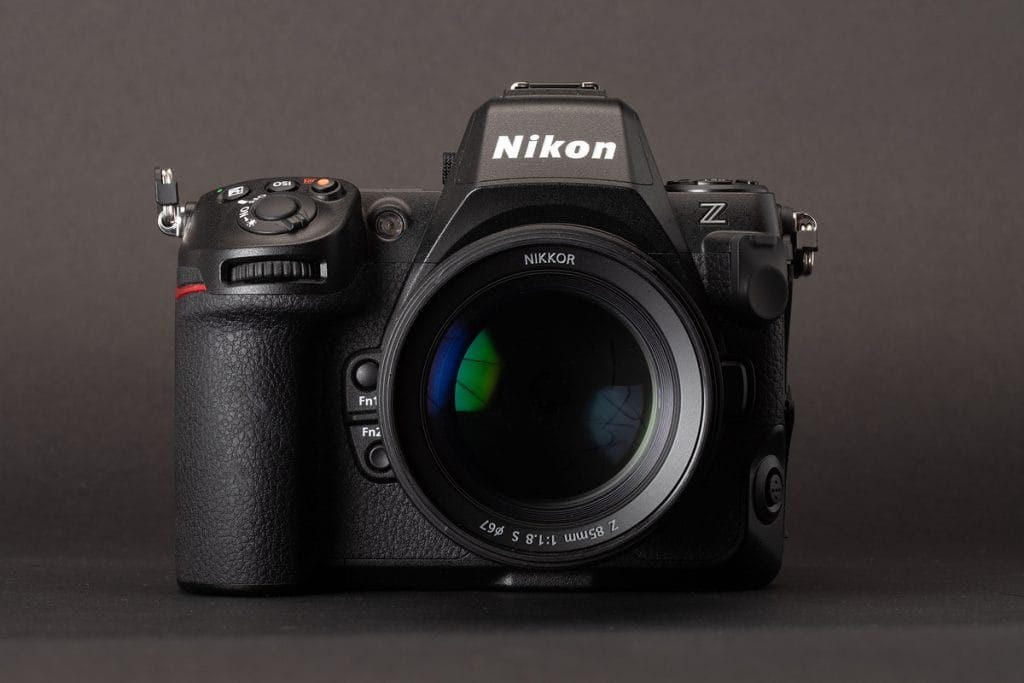
Image Source: DPReview
Mid-Range and Small Business Options
Photographers managing independent brands, Etsy shops, or regional boutiques can achieve professional results with equipment that balances performance and cost.
Canon EOS R6 Mark II with Canon RF 35mm f/1.8 Macro IS STM: The R6 Mark II provides 24 megapixels, sufficient for web-based sales and social media content. Its autofocus system performs reliably in varied lighting conditions. The RF 35mm macro lens offers a wider field of view, making it practical for flat lays or arrangements of multiple items. While the shorter focal length requires closer positioning to the subject, it remains manageable with careful lighting placement. This combination suits sellers who photograph diverse product categories beyond jewelry, as the 35mm focal length adapts well to different subjects.
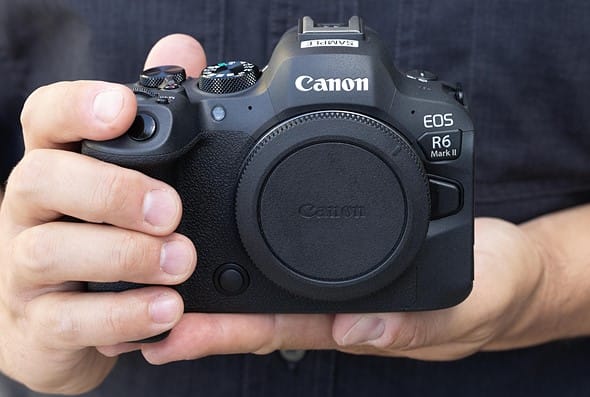
Image Source: DPReview
Sony a6700 with Sony FE 50mm f/2.8 Macro: The a6700 features a 26-megapixel APS-C sensor, delivering resolution adequate for online catalogs and marketing materials. Its compact form factor benefits photographers with limited studio space or those who travel to client locations. The 50mm macro lens provides a natural perspective with minimal distortion, rendering jewelry with accurate proportions. The APS-C sensor extends the effective focal length, offering additional working distance compared to full-frame systems using the same lens. This setup is practical for photographers building a portfolio or scaling operations gradually.
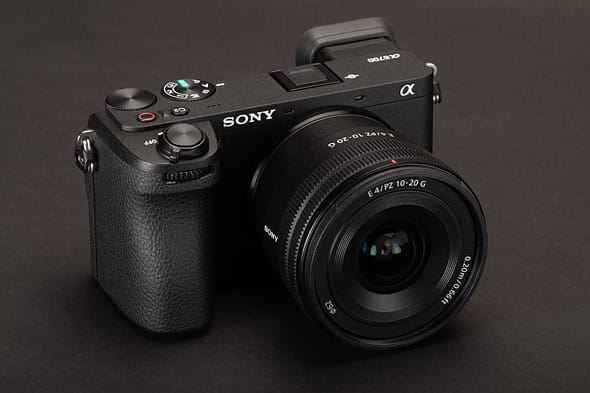
Image Source: DPReview
Nikon Z50 with Nikon Z MC 50mm f/2.8: The Z50 presents an accessible entry point into mirrorless photography with a 20-megapixel APS-C sensor. While not matching the resolution of higher-tier bodies, it produces clean files suitable for digital use. The Z MC 50mm macro lens delivers sharp results at 1:1 reproduction, capturing fine details in metalwork and stone settings. This combination allows beginners to learn fundamental techniques like focus stacking and diffused lighting without a significant initial investment. The Z-mount system also provides a clear upgrade path as needs evolve.
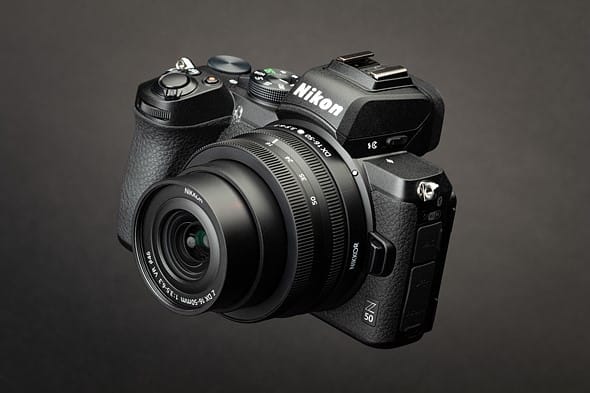
Image Source: DPReview
Starter Options and Practical Alternatives
Those exploring jewelry photography as a side project or testing market demand can begin with accessible equipment while developing core skills.
Entry-Level Mirrorless with Kit Lens: Cameras like the Canon EOS R50, Sony a6100, or Nikon Z30 paired with standard kit lenses (18-55mm) can produce usable images for social media or initial product listings. While these lenses lack true 1:1 macro capability, they often include close-focusing modes sufficient for larger pieces or styled arrangements. This approach allows photographers to practice composition, lighting, and basic editing before committing to specialized optics.
Smartphone Macro Modes: Current flagship smartphones include dedicated macro modes that can capture small subjects with surprising detail. These devices (like Google Pixel, iPhone, Samsung) offer computational photography features that enhance sharpness and dynamic range automatically. However, smartphones lack manual exposure control, interchangeable lenses, and the ability to execute focus stacking reliably. They serve best as temporary tools for learning or for creating casual content, with the understanding that dedicated camera equipment becomes necessary for professional e-commerce or print applications.
We have published an article – How to Take Pictures of Jewelry with iPhone: The Complete Guide for Stunning Product Shots. You can read if you have an iPhone and want professional results for jewelry photos.
Understanding Macro Lenses: What 1:1 Reproduction Means
A 1:1 macro ratio indicates that the subject is projected onto the camera sensor at its actual size. For jewelry, this means a 10mm gemstone will occupy 10mm of space on the sensor, allowing for extreme detail capture without digital enlargement. Lenses with shorter focal lengths, such as 35mm or 50mm, work well for flat lays or multiple items arranged together. Longer focal lengths, like 90mm or 105mm, provide greater working distance, which helps avoid casting shadows and allows for more controlled lighting setups. Prime macro lenses generally deliver sharper results than zoom alternatives due to simpler optical designs optimized for close focusing.
Essential Accessories for Consistent Results
Stability Equipment
Camera movement becomes magnified at close focusing distances. A sturdy tripod eliminates shake and ensures consistent framing, especially when using focus stacking techniques. Pair it with a remote shutter release or camera app to avoid touching the camera during exposure.
Lighting for Reflective Surfaces
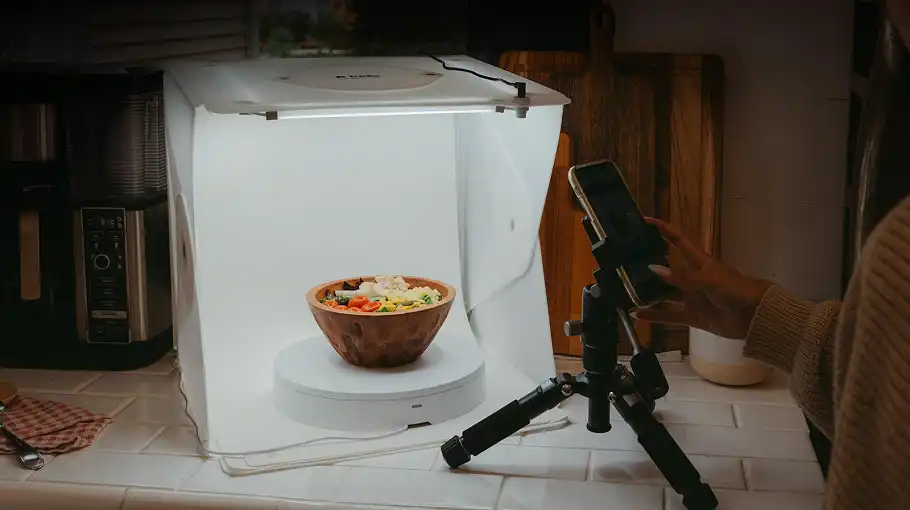
Jewelry reflects its environment. Direct light sources create harsh highlights that obscure detail. Diffused lighting, achieved through softboxes, light tents, or LED panels with diffusion material, produces even illumination that reveals texture without overwhelming glare. Position lights at 45-degree angles to the subject and use white reflectors or foam boards to fill shadows on gem facets.
Background and Styling Tools
Seamless paper, velvet, or textured surfaces provide clean backgrounds that keep focus on the product. Neutral tones like white, gray, or black work universally, while colored backdrops can support brand storytelling. Keep styling elements minimal to avoid distracting from the jewelry itself.
Practical Workflow: From Capture to Final Image
Jewelry Camera Settings Checklist
Apply these as starting points and adjust based on your specific setup.
- File format: RAW, 14-bit if your camera allows. You need the latitude to correct exposure and white balance precisely.
- White balance: Set a custom white balance using a gray card placed in the exact lighting setup. Auto white balance can shift between shots, creating inconsistent metal tones.
- ISO: Base ISO (usually 100 or 200). Noise reduction even at moderate ISOs can smear fine textures like engraving lines.
- Aperture: For a single ring or earring at an angle, start at f/8. For a grouping of pieces, f/11 to f/14. Avoid f/16 and smaller unless absolutely necessary, as diffraction begins to soften overall detail. Use focus stacking to gain depth of field without resorting to tiny apertures.
- Shutter speed: Irrelevant when on a tripod; set it to match the exposure indicated by your meter. With strobes, use the camera’s sync speed (typically 1/200s or 1/250s) and control exposure via flash power.
- Focus mode: Manual focus with focus peaking enabled, or single-point AF set to the exact area of critical sharpness. For stacking sequences, use the camera’s focus bracketing menu.
- Picture profile: Neutral or Flat, with contrast and sharpening turned down. You will add contrast and sharpening in post-processing, where you have more control.
Focus Stacking Process
Focus stacking addresses the limited depth of field inherent in macro photography. Capture a series of images, shifting the focus point slightly between each shot to cover the entire subject from front to back. Use your camera’s focus bracketing feature if available, or adjust manually with precision. Combine the images in software like Adobe Photoshop or Helicon Focus to produce a single file with edge-to-edge sharpness.
Minimal Retouching for Authentic Results
Post-production should enhance, not alter. Remove dust spots, clean up backgrounds, and make subtle adjustments to exposure or contrast. Avoid excessive sharpening or saturation that misrepresents the product. For high-volume sellers, consider professional jewelry retouching services to maintain consistency across large catalogs while preserving image authenticity.
Choosing the Right Setup for Your Needs
Select professional-tier equipment if you photograph high-value items, require print-quality output, or serve luxury clients who expect pixel-perfect detail. Mid-range systems suit small business owners, Etsy sellers, or photographers primarily creating content for web and social media. Starter options work for those testing jewelry photography as a side project or learning foundational skills before investing further.
Remember that skill and lighting technique often matter more than equipment specifications. Master composition, light control, and focus stacking before upgrading gear. Incremental investments aligned with growing needs yield better returns than purchasing top-tier equipment before developing the expertise to use it effectively.
Can I use a smartphone for jewelry photography?
Do I need a dedicated macro lens?
How do I manage reflections on gold or silver?
What is the most reliable method to keep an entire ring in focus?
Final Thoughts
Building a jewelry photography setup starts with understanding your specific needs. A capable camera body, a true macro lens, stable support, and controlled lighting form the foundation. Prioritize learning focus stacking and light management before pursuing higher megapixel counts or premium lenses. Whether you begin with a mid-range mirrorless system or invest in professional gear from the start, consistent practice and attention to detail will produce images that showcase jewelry with clarity and appeal. Choose equipment that supports your current workflow while allowing room to grow as your skills and business expand.